December 12, 2009

11: Going Bananas in Guatemala 1954

As George C. Marshall was being honored for the Marshall Plan designed to spur a peaceful economic recovery in Europe, his friend William Pawley was becoming involved in more hostile activities. In response to Guatemalan President Jacobo Arbenz Guzman calling for agrarian reform that would impact profits of United Fruit and coffee growers, the CIA drew up a contingency plan to overthrow him. CIA Director Allen Dulles wanted “a coordinated effort in the political field.” Dulles felt that “the exact steps which might be politically feasible are matters beyond our competence here” nonetheless “we have a legitimate interest, it seems to me, in seeing that the climate is right for the types of action in which we may be engaged.”

Secretary of State John Foster Dulles suggested  to President Eisenhower “sending a two-fisted guy to the general area on a trip of inspection and to report to the President.” Who did he have in mind? “Bill Pawley or someone of his type might be considered. I recognize that Pawley is hard to control, but he is fearless and gets things done even though he may break a little crockery in doing it. I would suggest that he might also spend a little time in the countries bordering on one of our chief concern.”1

Prior to Dulles envisioning Pawley’s new role, covert “Security Clearance” had been requested by the CIA’s Branch 4 of the Western Hemisphere (WH-IV aka WH/4)—the Caribbean region—for Pawley to “be used in Project DTROBALO as a means of offering employment and resettlement to rehabilitated disposees [sic].” Pawley it was noted “has many contacts and business interests in Latin America which will be valuable in the resettlement phase of the Project. He is not to be used as a consultant. He will be used on a witting basis” and his cover story would be “Governmental” rather than “Commercial” or “Other.” 

Read more »

Labels: , , , , , , , , , , , , , , , , , , ,

12: The Doolittle Report on CIA Covert Activities

Pawley’s participation in the Guatemala coup left him feeling satisfied in 1954 that “the Monroe Doctrine and the position adopted by the Organization of American States had been forthrightly reasserted.”1

But he had also experienced first-hand “an absolutely intolerable breach of security during the Guatemalan episode” which he detailed decades later in his autobiography. After playing tennis with The Washington Post publisher Phil Graham, Pawley was stunned to hear Graham “lob over my head” the news that the U.S. was going to help Castillo Armas overthrow the Arbenz regime in Guatemala. Graham gave him more details as if Pawley was “listening to a top secret briefing at State. All that was missing was my role in the affair.” Graham revealed the source of his knowledge as a CIA “high official in the covert operations arena.”

While indicating that he did not question Graham’s patriotism, Pawley noted that “Graham’s lapse underlines the axiom in delicate operations that a participant should be told only what he needs to know. No more. No less.”

Pawley immediately told President Eisenhower of the security breach, and Ike responded by telling Pawley “‘to conduct a thorough investigation of the covert side of CIA operations for me.’” Pawley was concerned that it would jeopardize his invaluable relationships with the Dulles brothers at State and CIA. As a result, Eisenhower then suggested that Lt. General Jimmy Doolittle, “a national symbol of competent fair mindedness,” head up the study group with Pawley assisting him.2

Pawley’s files were moved from covert to an overt file, and he was given cryptographic clearance in preparation for becoming a key member of Eisenhower’s Special Study Group. The Doolittle Committee was formed in the summer of 1954 to study the CIA’s successes and failures in Guatemala, Iran and Europe and make recommendations on how to improve the agency’s capabilities.

During the clearance process Pawley’s background information passed through many hands including CIA Director Allen Dulles and the Director of Security Sheffield Edwards3, who seven years later would play a role in a plot with members of the Mafia to assassinate Fidel Castro,4 something Pawley would advocate.5

The July 13, 1954, two recommendations were written concerning “Bill Pawley’s usefulness.” One was from Henry Holland. “In my opinion Pawley would perform outstandingly on almost any assignment. His abilities as a lone operator are generally recognized. On the Guatemalan assignment he functioned smoothly as a member of a team.”6

The second recommendation was in the form of a CIA memorandum for Director Allen Dulles from Director of Security Sheffield Edwards who had set up Project BLUEBIRD’s teams of psychiatrists, polygraphers, hypnotists and technicians to identify risky CIA personnel and defectors in 1950. (BLUEBIRD evolved into ARTICHOKE and then MKULTRA.)

Read more »

Labels: , , , , , , , , ,

15: Suspicious Minds

In the summer of 1958, Secretary of State John Foster Dulles and President Eisenhower became suspicious of Fidel Castro’s true intentions after U.S. sailors from Pawley’s childhood stomping grounds of Guantanamo were seized by Castro forces. This was followed by Raul Castro’s demand for $10,000 from United Fruit. United Fruit representatives were “considerably concerned over the general lawlessness of some of the Castro elements in the area, communist infiltration into the movement and lack of control by Fidel over his errant brother, Raul.” United Fruit’s Vice President of Cuban Operations Raines described President Fulgencio Batista’s “Cuban Army in the area as being completely ineffectual.” As it had successfully done when Guatemala’s Arbenz threatened corporate profits, United Fruit once again looked for President Eisenhower to eliminate this new thorn in Cuba.1

The job of preventing communism’s spread in the Western Hemisphere lay on the shoulders of the Colonel J.C. King who oversaw the CIA’s Western Hemisphere Division. Colonel King, years later, responded to a question from Attorney General Robert Kennedy stating that the Agency concluded Castro was unacceptable to the U.S. politically, as early as June or July 1958. Admiral Arleigh Burke commented that some in the State Department, with the exception of Under Secretary Robert Murphy, still had hopes for Castro being politically compatible in December of that year.

A declassified foreign policy document states that “in late 1958 CIA made two attempts (each approved by the Department of State) to block Castro's ascension to power. The first attempt was made in November 1958 when contact was established with Justo Carrillo and the Montecristi Group. The second attempt was made on or about the 9th of December 1958 when former Ambassador William D. Pawley, backed by the CIA Chief of Station in Havana, and Colonel King, approached Batista and proposed the establishment of a Junta to whom Batista would turn over the reins of government.”2
Read more »

Labels: , , , , , , , , , , , , , , , , , ,

16: Find Me Someone to Kill Castro

Pawley’s reaction to Castro taking control of Cuba was filled with thoughts of violence. Not only did it threaten his investments but embarrassed him personally by showing the folly of his buffer-government plan. He told a reporter in Miami that he would personally pay any amount to anyone who assassinated Castro. Then retracted his angry comment within days. In lieu of contracting an assassin, he began helping CIA Director Allen Dulles organize thousands of exiles fleeing Cuba to make sure the communist rebels in Cuba would be confronted by a force more ruthless than the enemy.1

On February 23, 1959, CIA Director Allen W. Dulles wrote to Pawley, thanking him for his good letter of February 18. “J.C. [King] has brought me up to date on his recent talks with you. As you know, we are running into difficulties in finding a resting place for the person about whom you telephoned me but I shall be working with State on that. I shall speak to Foster about your letter when next I see him. I know he will sincerely appreciate your thoughts. On a whole, he is making as good progress as could be expected and well tolerating the treatment he is receiving.”

In April 1959 Castro visited the United States for eleven days, giving the most optimistic Americans hope that he would not become a total surrogate for the Soviet Union.2 But when Castro returned to Cuba, he put a limit on private land holdings with the state expropriating the remainder under a policy of Agrarian Land Reform. That summer, President Urrutia resigned, and Osvaldo Dorticos Torrado became the country's president.3

On July 27, 1959, Marcos Diaz Lanz (MDL), who was on Raul Castro’s list of government officers to be purged, escaped from Cuba to Florida with the assistance of Bernard Barker (right in photo) who earlier had transferred Marcos to a CIA safehouse in Cuba. Three weeks later, Marcos was “living in Fiorini’s house” in Florida while Barker remained in Cuba for another six months. After finally arriving in Miami, Barker and Frank Fiorini (aka Frank Sturgis; left in photo) would take part in numerous attempts to overthrow the Castro brothers. (A dozen years later, Sturgis and Barker would be arrested with E. Howard Hunt, Virgilio Gonzalez, James McCord, Jr., and Eugenio Rolando Martinez after a break-in at the Democratic National Headquarters in the Watergate Hotel in Washington, DC.)4

Read more »

Labels: , , , , , , , , , , , , , , , , ,

17: QDDALE

An October 2, 1959 dispatch from Miami’s CIA Western Hemisphere Division (WHD) Representative Patrick I. Karnley to the CIA’s WHD Chief J.C. King refers to William Douglas Pawley as QDDALE, the cryptonym established for him by the CIA’s Clandestine Services. Karnley reported that Pawley wished he had a tape recording of his meeting with wealthy Cuban exile Fabio Freye who seeks to topple Castro. Karnley’s dispatch also mentioned a discussion of staging an invasion against Castro from an uninhabited British island, but it was assumed the British government would balk at its usage.1

Eleven days later the CIA’s Martha Tharpe (Margarite Forsythe) recapped discussions of the use of the British island of Nassau and noted that “QDDALE is a prominent U.S. businessman in Miami with good contacts among Cuban exile groups.”2

The QD prefix appears to relate to anti-Castro activities within Cuba. In 1998, the National Archives Kennedy Assassination Collection contained 49 QDDALE documents from 1960 to 1964 in addition to 978 Pawley documents which first appear in 1950.3

Among the earliest of the dozen plus documents on QDBIAS (Pedro Diaz Lanz) is a nearly illegible one from August 1959 discussing a meeting with QDCHAR (Marcos Diaz Lanz) and QDCOVE (Ricardo de la Lorie aka Ricardo Luis de la Lorie-Bals aka Ricardo Lorie Valls) that mentions Frank Fiorini (aka Frank Sturgis) who “talks too much.”4 

A September 4th cable expressed CIA Headquarters “interested learning more about QDBIAS group in Cuba. Proceed as suggested taking due precautions through use of cutout to protect ODACID [U.S. State Department] from charges of abetting counterrevolutionaries.” 

A comment noted that Havana “Station officers had met with
Angel Ros ... a member of the QDBIAS group.”
5 Angel Sebastian Ros Escala was the national coordinator of the MRR and a splinter group, who would flee to Miami several months later and become AMPALM-10.6 (In the years that followed he became a double agent for Castro using the name Raul Gonzalez.)7

Read more »

Labels: , , , , , , , , , , , , , , , , , ,

18: Controlling Cuban-Exile Chaos

Publicly Vice President Richard Nixon was asserting that the U.S. should take a hands-off approach to Cuba and hope for the best.1 But in fact, Nixon had been dealing with the issue of Castro since at least April 19, 1959, when he met with Castro and then “prepared a 4-page secret memorandum and sent out copies to President Eisenhower, Secretary Herter and to Allen Dulles.” Herter was serving as Secretary of State in place of an ailing John Foster Dulles who coincidentally was hospitalized at the same time as former Secretary of State George C. Marshall. Dulles died May 24, 1959, while Marshall passed October 16, 19592 leaving a hole in William and Edna Pawley’s personal lives and William’s sphere of influence.

In the 12 months since Castro ascended to power, the Cuban government had expropriated 70,000 acres of property owned by U.S. sugar companies and United Fruit. Once again, the company would call for U.S. action to overthrow a government.3 

The tsunami of Cuban exiles arriving in the U.S. made that mission seem easy if someone could vet them to determine the best future political leaders and organize an effective fighting force.

On January 3, 1960, President Eisenhower announced that the U.S. was severing diplomatic relations with Cuba. On January 13th a Special Group meeting attended by CIA Director Allen Dulles and Livingston Merchant from the State Department discussed “Anti- Castro Activities.” With these actions and Eisenhower's March 17th approval of a plan to invade Cuba, he was in essence establishing an undeclared war that would hang like an albatross around Uncle Sam’s neck.

The CIA began dealing with Fidel on a formal basis on January 8, 1960, when Director Allen Dulles asked Deputy Director of Plans Richard “Dick” Bissell to organize a special task force. Ten days later the Western Hemisphere Division “organized Branch 4 (WH/4) as an expandable task force to run the proposed Cuban Operations” manned “with 18 at Headquarters, 20 at Havana Station, and 2 at Santiago Base.”

Heading WH/4 was Jacob “Jake” D. Esterline (aka Jacob Engler) who had gained “extensive guerilla warfare experience in World War II with the OSS” and was “one of the principals in Project PBSUCCESS” in Guatemala in 1954. “Esterline was the choice of J.C. King, Chief, WH Division.” As head of the WH/4 Cuban unit during the fifteen-month run up to the Bay of Pigs invasion, Esterline took his orders from the Deputy Director Plans Richard Bissell but frequently had direct contact with J.C. King and the Miami-based Cuban expert, William Pawley. Both were to be reckoned with because they “had known Republican Party affiliations.”4

King’s full role during the period and many interactions with Pawley will never be known. His papers that once filled eight safes—then only two—disappeared, according to an official history of the period.5

Read more »

Labels: , , , , , , , , , , , , , , , , , , ,

20: Hitmen

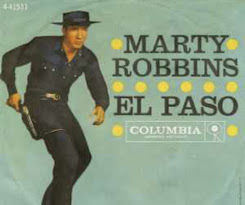
Before entering politics in 1945, Sen. Homer E. Capehart (R-Indiana) had been a highly successful businessman known as “the father of the jukebox industry.” Back then, a jukebox contained dozens of 45-rpm, 7-inch records that could be heard on a pay-for-play basis by depositing a coin and pushing buttons that corresponded to the song selection. Jukeboxes quickly became fixtures in diners, bowling alleys, military installations, laundromats, college campus lounges and other gathering spots. Record companies embraced them because this new platform provided another way for songs to get heard and for artists to become bigger stars, such as country & western singer Marty Robbins. In an age of 2 minute records, his 4-minute-38-second song about a gunslinger in the west Texas town of “El Paso” became a No. 1 hit while Pawley was planning Castro’s demise through his own hit squad. As for Capehart, he became an astute politician before losing his seat after three terms to Birch Bayh.1

In the spring of 1960, the CIA Deputy Director of Plans sent FBI Director J. Edgar Hoover a memo from the Department of State that remained classified until 2011 and was not released for several more years. In the memo, the U.S. Counselor of Embassy for Economic Affairs in the Dominican Republic reported that he had talked on February 23, 1960 to Wallace B. Rouse, a long-time construction engineer who had traveled a few months earlier to Ciudad Trujillo with Senator Homer E. Capehart (R- Indiana). The group had hoped to seal “a large business deal” that collapsed at the “last minute” when Generalissimo Trujillo called the group “‘thieves’” which greatly upset Rouse.

Rouse told the Senator that “Pedro Moreles (presumably an American citizen) was recently given $5,000 ‘earnest money’ in Miami as a downpayment to bump Castro off. Rouse implied this was arranged by [Arturo] Espaillat acting for Trujillo, and also implied that former U.S. Ambassador William Pawley was implicated.” After describing how Moreles would be smuggled into Cuba, Rouse stated that “William Pawley had asked him why he, Rouse, had not sent gunmen to kill Castro; and that Pawley told him if that didn’t work ‘he would send his own gunmen’ to do the job. On arrival in Port- au-Prince, the Embassy Administration Officer, unaware of the Rouse conversation, coincidentally said he had been seated next to William Pawley on a flight from New York to Port-au-Prince during which Pawley had made the identical remark to him.”2 Bold emphasis added by D.P. Cannon


Read more »

Labels: , , , , , , , , , , , , , , , , ,

26: Days of Swine and Rose's Boys: Bay of Pigs Invasion

Fear of retaliation was a concern as the CIA planned the demise of two Western Hemisphere leaders, Castro and Trujillo. According to the CIA’s Deputy Director for Support, Col. L.K. White, on March 22, 1961, the CIA’s Sheffield Edwards and Jack Earman met with CIA Deputy Director General Charles Cabell “to point out to them that we were not furnishing the Director the personal protection which we should be furnishing in these critical times.”1

On April 4, 1961, President John F. Kennedy, the first Catholic president whose mother, Rose, prayed the rosary throughout his life, heard about the “immorality” of an invasion of Cuba voiced by Senator William Fulbright, chairman of the Senate Foreign Relations Committee. While Fulbright “denounced the proposition out of hand,” Adolphe Berle declared his belief that “a ‘power confrontation’ with Communism in the Western Hemisphere was inevitable.” Assistant Secretary of State for Inter-American Affairs Thomas C. Mann, “who previously had been on the fence, now spoke up for the operation.”2 Rose’s son’s march toward disaster proceeded headlong with the momentum created by Pawley-intelligence-exile axis.

Pawley on April 15th sat down with FBI agents Leman L. Stafford, Jr. and George E. Davis, Jr. for an interview that Pawley had requested. He let them know he was “a personal friend of the Director of the FBI, as well as of President Eisenhower, former President Truman and many other influential people in the United States and Latin America.” Pawley then voiced “that he is deeply concerned about the communist trend in Cuba and its effects on other Latin American countries, and that he has been in close contact with the U.S. State Department and the CIA relative to the situation.”3

Manuel Ray Rivero “took the view that the internal resistance was so strong that Castro could be overthrown without an ‘invasion’ from the outside.” (In truth, there was only insignificant damage from the 110 insurgent bombings between October 1960 and April 17, 1961,4 when Jose A. Perez “Pepe” San Roman led the Bay of Pigs invasion.)5

Ray’s wishy-washy stance on the need for an invasion did not sit well with Pawley, and in the weeks before the invasion Ray complained that assertions that he favored Cuba maintaining relations with the U.S.S.R. “were not true and part of a ‘campaign against him by Mr. Pawley of the Miami City Transit Company.’”6

Despite the desire to make it look like a Cuban led invasion, among the first men ashore were two non-Cubans, Grayston L. Lynch (aka Gray) and William “Rip” Robertson, who had been among those suggested as possible assassins of Castro. Lynch, a fearless veteran of the D-Day invasion at Normandy Beach, the Battle of the Bulge, and Heartbreak Ridge in Korea, would survive the debacle at the Bay of Pigs and go on to direct and participate in hundreds of more clandestine operations against Cuba. A decade before dying in 2008, Lynch published his account of the invasion imbued with anger at the failure of the Kennedy Administration to provide the essential air cover titled Decision for Disaster: Betrayal at the Bay of Pigs. Rip Robertson’s passion for adventure ended a decade later when he “died in 1973 of malaria in Laos.”7

Read more »

Labels: , , , , , , , , , , , , , , , ,

34: The Warren

The November 22, 1963, 12:30 pm (CST) JFK assassination was quickly painted as the act of a disgruntled loner with a communist taint who expertly picked off his target as President Kennedy traversed past Dealey Plaza moving away on a downward curving road from the sniper's nest on the 6th Floor of the Texas School Book Depository. 

Within 48 hours of the shooting, the alleged shooter, Lee Harvey Oswald, was shot by Jack Ruby who owned The Carousel nightclub, a strip-tease joint strategically located across from the popular Dallas hotel, The Adolphus. Ruby's club not only was frequented by tourists as well as local politicians and businessmen but also by members of the Dallas Police Department. The policemen not only came to imbibe in drinks and titillation but often were employed by Ruby as security guards. This fact created the possibility of a complex conspiracy. 

Who was Lee Harvey Oswald? https://www.pbs.org/wgbh/frontline/article/twenty-four-years/

Did Ruby know Oswald? Did a Dallas cop tipoff Ruby or expedite Ruby's ability to enter the Dallas Police Department basement on November 24th at 12:20 pm, precisely when Oswald was in the process of being transferred to the county jail? Was Ruby connected to any mob boss—Joseph Civello in Dallas, Sam Giancana in Chicago or Carlos Marcello in New Orleans—who had put out a hit on Oswald?   

Oswald’s death triggered U.S. Deputy Attorney General Nicholas Katzenbach to write a memo to President Johnson's aide Bill Moyers, stating: "The public must be satisfied that Oswald was the assassin that he did not have confederates who are still at large and that evidence was such that he would have been convicted at trial." 

Katzenbach emphatically insisted on a coverup: "Speculation about Oswald’s motivation ought to be cut off and we should have some basis for rebutting thought that this was a Communist conspiracy or (as the Iron Curtain press is saying) a right-wing conspiracy to blame it on the Communists. Unfortunately the facts on Oswald seem about too pat—too obvious (Marxist, Cuba, Russian wife, etc.). The Dallas police have put out statements on the Communist conspiracy theory and it was they who were in charge when he was shot and thus silenced." Katzenbach wanted the Assistant FBI Director Cartha DeLoach to declare Oswald acted alone and suggested that it may become necessary for President Johnson to appoint a blue ribbon panel to prevent Congressional hearings that may arrive at a different conclusion.  

But even FBI Director J. Edgar Hoover had a problem. He told President Johnson that there was a very confusing angle about Oswald's visits to the 
Soviet Embassy in Mexico City between September 27 and October 2, 1963. 

"We have up here the tape and the photograph of the man who was at the Soviet Embassy using Oswald’s name. That picture and the tape do not correspond to this man’s voice nor to his appearance."  

In response to the FBI's inquiry to the CIA about the Agency's knowledge about Oswald, Birch O’Neal of the Counterintelligence Staff  replied “there was nothing on him in CIA file other than material filed furnished to CIA by FBI and Department of State.” In fact, however, the CIA's Special Investigations Group had been monitoring Oswald since November 1959 and within its dozen Oswald documents was a report that Oswald was in contact with the diplomatic offices of the Soviet Union and Cuba. Hoover wanted the FBI's legal attaché in Mexico City to look into the possibilities of a fake Oswald and Russian involvement.

For those who began decades of exploring Oswald-Ruby connections, it was a journey that entered a labyrinth that went around the world to Japan and Russia and back to the U.S. and Mexico; what emerged from the warren left many questioning why LBJ's "unimpeachable" Warren Commission left out of its investigation so many unusual connections. 

In the decades that followed, the Rockefeller Commission, House Select Committee on Assassinations and Church Committee would look into the connections and classify much of what they found. Sixty years later, thousands of declassified CIA, FBI, State, Army and other documents were still trickling out, and some documents such as those about the DRE’s CIA case officer, George Joannides, whose name did not surface until a half-century after the Bay of Pigs invasion, were still being withheld.

A lawsuit by reporter Jefferson Morley led to a court decision in December 2007 regarding declassification of documents relating to Joannides involvement with the DRE, the group that interacted with Oswald. Jefferson Morley wrote in The Washington Independent, that a circuit court had “ordered the CIA to search its operational files for more material on Joannides” and “explain why 17 reports on Joannides’ secret operations in 1962, 1963 and 1964, are missing from CIA archives. In legal briefs, agency officials have claimed that more than 30 documents about Joannides’s actions in the 1960s and 1970s cannot be made public in any form—for reasons of ‘national security.’”

The suit had been filed after it was learned that Joannides in the 1970s had become the CIA liaison carrying requested documents pertaining to Oswald’s possible co-conspirators from the Agency to the House Select Committee on Assassination (HSCA).

Read more »

Labels: , , , , , , , , , , , , , , ,

47: Timeline

1864 ~ Edward Porcher Pawley born.

1890 ~ Edward marries Mary Irene Wallace.

1893 ~ George Plummer Pawley born. 

1896/9/7 ~ William Douglas Pawley born in Florence, South Carolina.

1899 ~ After the Spanish American War when Teddy Roosevelts “Rough Riders” help liberate Cuba from Spain, Pawley spends his early childhood at Guantanamo Bay Naval Station where his father had a store, earning him the nickname “Cuba” from classmates at Gordon Military Academy in Georgia.

1925/5/20 ~ Gerardo Machado becomes the 5th President of Cuba. He is overthrown in 1933.

1928 ~ William Douglas Pawley creates Cubana National Airlines which is sold to Pan American Airlines in 1932.

1929 ~ China Airways financed by Curtiss-Wright and controlled by Clement M. Keys begins flying mail from Shanghai to Hankow, Peiping and Canton. With pressure from the government, it evolves into China National Aviation Corporation (CNAC).

1932 ~ William Pawley establishes Intercontinent Corporation run by him and his brothers Edward and Eugene.

1933 ~ Pawley becomes President of China National Aviation Corporation.

1936 ~ William's oldest brother, George Plummer Pawley, dies.

1940/12/23 ~ Pawley partners with India in establishing Hindustan Aircraft Limited near Calcutta (Bangalore).

1941 ~ Pawley begins China Aircraft Manufacturing Company CAMCO to manufacture planes for the American Volunteer Group (The Flying Tigers headed by General Clair Chennault) to defend Chiang Kai-shek’s Nationalists against Japanese planes. CAMCO airplane assembly plants moved from Hangzhou to Wuhan to Lowing (on the China-Burma border) to India. 

1941/9 ~ David Harold Byrd, wealthy oil man and owner of the Texas School Book Depository in Dallas, co-founds the Civil Air Patrol to watch for enemy submarines and border crossings as well as enemy aircraft over the U.S. and provide other civilian support for the U.S. Army Air Force. Byrd is a cousin of Antarctic explorer Richard Byrd and West Virginia politician Harry F. Byrd. 

1942 ~ CNAC operates out of Calcutta until 1945.

1943 - E. Howard Hunt, Jr. serves as a wartime intelligence officer in China.

1945/7/20 ~ Pawley becomes U.S. Ambassador to Peru.

1945/10/13 ~ Carlos Prio Socrarrás becomes 5th Prime Minister of Cuba. 

1946/6/13 ~ Pawley becomes U.S. Ambassador to Brazil.

1947 ~ Antonio de Varona appointed leader of the parliamentary committee of his party under Prio. Previously, de Varona was involved in the overthrow of Gerardo Machado and was elected to the Cuban congress and the senate.

1948 ~ E. Howard Hunt, Jr. becomes spokesperson in Paris for the Marshall Plan's Economic Cooperation Administration. George C. Marshall and his wife are close friends of the Pawleys.

1948/10/10 ~ Carlos Prio becomes President of Cuba, succeeding Ramon Grau.

1949/9 ~ Pawley negotiates taking over the Havana trolley system.

1950/1 ~ Pawley runs Havana Autobuses Modernos, removing trolley car tracks. He also becomes a partner with John J. McCloy and others in Commerce International China.  

1950 ~ E. Howard Hunt becomes Chief of Station of the Office of Policy Coordination in Mexico City. 

1951/2/4 ~ Pawley's daughter, Annie Hahr, weds.

1951/2/19 ~ Pawley enters State Department as special assistant to Dean Acheson.

1951/6 ~ Pawley visits India re wheat and monazite.

1951/9 ~ Son, Clifton Pawley, dies in Mexico; William flies from Washington to Mexico City and Miami. 

1951/11/20 ~ Pawley resigns from State Department effective the 30th. 

1951/12/3 ~ Pawley enters Defense Department as special assistant to Lovett.

1952/1/17 ~ Pawley sails with Edna and Anita Pawley and his assistant Ed Harris to Europe; stays until May, but returns to Washington to settle a strike in Miami then flies to Lisbon Conference with Lovett and takes a two week trip for consultation with Defense Department.

1952/5 ~ Pawley resigns as assistant to Lovett.

1952/6 ~ At Belvoir House farm in Virginia.

1952/9 ~ Pawley in Europe and Middle East with Edna.   

1952/3/10 ~ Fulgencio Batista overthrows Prio; de Varona begins fight against Batista.

1953 ~ Pawley in Miami serving as owner president and general manager of the Miami Beach Railway Co. since 1941 and of Miami Transit Co. since 1948. Also owner of South Miami Coach Line and Tropical Coach Line Inc. and Grayline Sightseeing Co. of Miami.

1953 ~ William, Edward and Eugene Pawley develop oil and mining companies in Mexico.

1953/4/4 ~ CIA coup against Mossadegh in Iran (Operation AJAX) is hatched by Secretary of State John Foster Dulles, CIA Director Allen Dulles, Frank Wisner and Kermit Roosevelt, Jr.  Mossadegh is replaced by the Shah of Iran Mohammed Reza Pahlavi, coincidentally a former classmate of future CIA Director Richard Helms.

1954/6 ~ Pawley works with the CIA on PBSUCCESS, the overthrow of the Arbenz government in Guatemala. So does E. Howard Hunt, Jr.

1954/6 ~ William Pawley, William Franke, Morris Hadley and General Jimmy Doolittle appointed by President Eisenhower to review the Central Intelligence Agency. They recommend that the CIA become “more ruthless than the enemy.”

1955/7/27 ~ Lee Harvey Oswald joins the Civil Air Patrol in New Orleans which also includes Captain David Ferrie.

1956/10/24 ~ Oswald drops out of high school in Texas and joins the U.S. Marine Corps where he is trained as a sharpshooter.

1958/10/5 ~ Oswald is stationed at the Air Force base in Atsugi, Japan where the U.S. dispatches U-2 planes to spy on Russia. Oswald learns Russian.

1959/Spring ~ Oswald, back in the U.S., becomes friend of Kerry Thornley. 

1959/9/4 ~ Oswald applies for a passport a week before he is discharged from active duty in the Marine Corps.

1959/9/20 ~ Oswald departs the U.S. 

1959/10/2 ~ Pawley is given the CIA cryptonym QDDALE.

1959/10/15 ~ Pawley installs a tape recorder to tape discussions with Cuban exiles.

1959/10/31 ~ Oswald defects to the Soviet Union offers U-2 secrets.

1959/11/16 ~ Oswald interviewed by Priscilla Johnson.   

1959/12 ~ Pawley tries to convince Batista to step aside so an interim government could be put in place as a buffer against Castro.

Read more »

Labels: , , , , , , , , , , , , , , , ,

50: Cold War Replay


In September 2022, General Michael Minihan, head of the Air Mobility Command, told a military conference that the U.S. Air Force was responsible for more enemy deaths than any of the other U.S. military organizations. Three months later he predicted that China would invade Taiwan where Pawley's friend Chiang Kai-Shek and thousands of nationalists made their home after communists had seized the mainland seven decades earlier. In anticipation, the U.S. Air Force increased its presence in the Philippines.

General Minihan also shared with conference attendees a personal orgasmic pleasure— with the killing of “‘your enemy, every part of your life is better. Your food tastes better. Your marriage is stronger.’”1 

I disagree. In the early 1970s, a decade after the Kennedy assassination, I wrote this song called "Inhumanity."

I am the madness

That makes men want to kill. 

I am the taste of blood

That gives them the thrill.

I am the feeling

That drives a mother wild, 

Until she beats to death

Her helpless baby child.

I am the fist

Raised in anger.

I am the cry

Let’s gang bang her!

I am the daggers

Seen in many eyes.

I am the voices

Of a thousand million lies.

I am the crowd 

Full of faces 

Chanting names 

At other races.

I am the soul of hypocrisy 

Making a shambles

Of this democracy.

I have razed civilizations,

Destroyed powerful men, 

Ruined the lives of many, 

And I’ll do it once again. 

For I am fear and trouble, 

Terror and death at my best, 

And if I get a hold of you

I will never, never ever let you rest.

For I am insanity.

And there’s a little bit of me,

To a moral-less degree,

In all humanity.

I am in humanity.

~ Inhumanity. Lyrics & Music: David Price Cannon (1973)

On January 30, 2023, Spencer Ackerman, a 2014 Pulitzer Prize-winning national security journalist, wrote about General Minihan and concluded “anyone who's read Stanley Karnow's excellent book In Our Image will recognize as a retread of both Cold War and pre-Cold War imperial form ... Trump is Truman, Biden is Eisenhower, Mattis is Forrestal, McMaster is Acheson, Campbell is, I guess, John Foster Dulles, and this guy Minihan seems to think he’s Curtis LeMay.”2

Read more »

Labels: , , , , , , , , , , , , ,