December 12, 2009

20: Hitmen

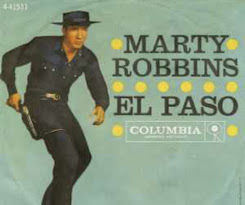
Before entering politics in 1945, Sen. Homer E. Capehart (R-Indiana) had been a highly successful businessman known as “the father of the jukebox industry.” Back then, a jukebox contained dozens of 45-rpm, 7-inch records that could be heard on a pay-for-play basis by depositing a coin and pushing buttons that corresponded to the song selection. Jukeboxes quickly became fixtures in diners, bowling alleys, military installations, laundromats, college campus lounges and other gathering spots. Record companies embraced them because this new platform provided another way for songs to get heard and for artists to become bigger stars, such as country & western singer Marty Robbins. In an age of 2 minute records, his 4-minute-38-second song about a gunslinger in the west Texas town of “El Paso” became a No. 1 hit while Pawley was planning Castro’s demise through his own hit squad. As for Capehart, he became an astute politician before losing his seat after three terms to Birch Bayh.1

In the spring of 1960, the CIA Deputy Director of Plans sent FBI Director J. Edgar Hoover a memo from the Department of State that remained classified until 2011 and was not released for several more years. In the memo, the U.S. Counselor of Embassy for Economic Affairs in the Dominican Republic reported that he had talked on February 23, 1960 to Wallace B. Rouse, a long-time construction engineer who had traveled a few months earlier to Ciudad Trujillo with Senator Homer E. Capehart (R- Indiana). The group had hoped to seal “a large business deal” that collapsed at the “last minute” when Generalissimo Trujillo called the group “‘thieves’” which greatly upset Rouse.

Rouse told the Senator that “Pedro Moreles (presumably an American citizen) was recently given $5,000 ‘earnest money’ in Miami as a downpayment to bump Castro off. Rouse implied this was arranged by [Arturo] Espaillat acting for Trujillo, and also implied that former U.S. Ambassador William Pawley was implicated.” After describing how Moreles would be smuggled into Cuba, Rouse stated that “William Pawley had asked him why he, Rouse, had not sent gunmen to kill Castro; and that Pawley told him if that didn’t work ‘he would send his own gunmen’ to do the job. On arrival in Port- au-Prince, the Embassy Administration Officer, unaware of the Rouse conversation, coincidentally said he had been seated next to William Pawley on a flight from New York to Port-au-Prince during which Pawley had made the identical remark to him.”2 Bold emphasis added by D.P. Cannon


Read more »

Labels: , , , , , , , , , , , , , , , , ,

46: Assassination Scenarios

In 1992, the National Archives began declassifying documents relating to Pawley’s CIA activities from 40 years earlier, and in 1999 it began releasing his QDDALE documents, which were still trickling out in December 2022 containing previously redacted names. Due to the Freedom of Information Act requesting process and the backlog at the National Archive, and the CIA’s reluctance to share the truth, it has taken from 1976 to 2023 to get close to finalizing this manuscript. 

Some of the still unreleased documents may have information pertinent to the complete picture of Pawley. Some may reveal other truths about Pawley, his associates and their dark diplomacy that transformed America from a beacon of hope for the world's oppressed into a nation where decades of ruthless tactics have helped rally enemies against us.

Some documents will never be found because of the paranoia of James Jesus Angleton and the politics of some officials. One example of this occurred during President Ronald Reagan’s term, when Everett Ellis Briggs, the United States Ambassador to Panama, in the summer of 1985, tried to keep visiting dignitaries away from General Noriega. “‘When Vernon Walters, a high-ranking CIA official, sent the general a very cordial Christmas greeting via the diplomatic pouch, I managed to intercept and destroy the message (without Mr. Walter’s knowledge).’”1

Cuban-born Briggs made the revelation five years after Walters died. For some reason, Briggs considered his judgment superior to the multilingual Walters who was a translator for Secretary of State Marshall at Pawley’s Latin America conference in Bogota when Briggs was just in his teens. Conservative writer and original television host of Firing Line, William F. Buckley, who attended Yale University, then entered the CIA under Case Officer E. Howard Hunt, did not share Briggs’ low opinion of Walters’ judgment and noted in the obituary he wrote for Walters, “Although his business in later years was diplomacy, his craft was intelligence, and the two blended in his hands.” The respect for Vernon Walters was demonstrated in 1980 when he was the guest speaker at the sixth annual national convention of the Association of Former Intelligence Officers whose members included former CIA Director Richard Helms, JMWAVES's George Joannides and former Western Hemisphere head David Atlee Phillips who founded the AFIO as he was coming under congressional scrutiny for his activities surrounding Lee Harvey Oswald.2

Read more »

Labels: , , , , , , , , , , ,