December 12, 2009

20: Hitmen

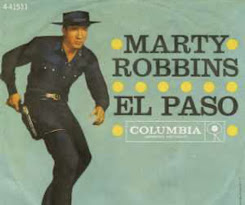
Before entering politics in 1945, Sen. Homer E. Capehart (R-Indiana) had been a highly successful businessman known as “the father of the jukebox industry.” Back then, a jukebox contained dozens of 45-rpm, 7-inch records that could be heard on a pay-for-play basis by depositing a coin and pushing buttons that corresponded to the song selection. Jukeboxes quickly became fixtures in diners, bowling alleys, military installations, laundromats, college campus lounges and other gathering spots. Record companies embraced them because this new platform provided another way for songs to get heard and for artists to become bigger stars, such as country & western singer Marty Robbins. In an age of 2 minute records, his 4-minute-38-second song about a gunslinger in the west Texas town of “El Paso” became a No. 1 hit while Pawley was planning Castro’s demise through his own hit squad. As for Capehart, he became an astute politician before losing his seat after three terms to Birch Bayh.1

In the spring of 1960, the CIA Deputy Director of Plans sent FBI Director J. Edgar Hoover a memo from the Department of State that remained classified until 2011 and was not released for several more years. In the memo, the U.S. Counselor of Embassy for Economic Affairs in the Dominican Republic reported that he had talked on February 23, 1960 to Wallace B. Rouse, a long-time construction engineer who had traveled a few months earlier to Ciudad Trujillo with Senator Homer E. Capehart (R- Indiana). The group had hoped to seal “a large business deal” that collapsed at the “last minute” when Generalissimo Trujillo called the group “‘thieves’” which greatly upset Rouse.

Rouse told the Senator that “Pedro Moreles (presumably an American citizen) was recently given $5,000 ‘earnest money’ in Miami as a downpayment to bump Castro off. Rouse implied this was arranged by [Arturo] Espaillat acting for Trujillo, and also implied that former U.S. Ambassador William Pawley was implicated.” After describing how Moreles would be smuggled into Cuba, Rouse stated that “William Pawley had asked him why he, Rouse, had not sent gunmen to kill Castro; and that Pawley told him if that didn’t work ‘he would send his own gunmen’ to do the job. On arrival in Port- au-Prince, the Embassy Administration Officer, unaware of the Rouse conversation, coincidentally said he had been seated next to William Pawley on a flight from New York to Port-au-Prince during which Pawley had made the identical remark to him.”2 Bold emphasis added by D.P. Cannon


Read more »

Labels: , , , , , , , , , , , , , , , , ,

25: The Name Game

In the past, Pawley would go straight to the top to argue his position to Presidents Roosevelt, Truman or Eisenhower when he felt that his dealings with underlings were not going well. But in the new Kennedy administration, he did not have that access, so he had to take his case to Assistant Secretary of State Thomas Mann (photo), whom weeks earlier Pawley had praised as “brilliant” and no “nicer fellow” while chastising him for his friendship with Betancourt.1

Pawley in early March 1961 began sending Mann materials to make the case against Manuel “Manolo” Ray and for the use of others.2 Ray was a former professor of engineering at the University of Habana, who had been selected by the CIA to rally support. Pawley disliked him because he had served as Castro’s Minister of Public Works, although he quit the Castro cabinet position after his friend Huber Matos was arrested by Castro. Ray then defected to the U.S. and became the leader of the anti-Castro counterforce People’s Revolutionary Movement (MRP).3

In the letter to Assistant Secretary of State Thomas Mann, Pawley demonstrated his mastery of the Cuban situation while raising the possibility of a post-Castro civil war if the wrong leaders are selected. “It [is] also thought by important Cubans whom I know here that Ray and three or four of the other prominently mentioned Cubans have already made arrangements through Russian agents and that when Castro falls, Russia will still have their men in power even though they pretend to demonstrate a more friendly attitude toward the United States.” Pawley stated “that the best solution would be a ‘junta’ or ‘frente’ made up of leaders of the various political groups. At no time has this seemed more necessary than now.” He offered four names for this role: de Varona, Carillo, Artime, and Maceo.

Read more »

Labels: , , , , , , , , , , , , , , , , , ,

27: Brigade 2506 Hostage Negotiations

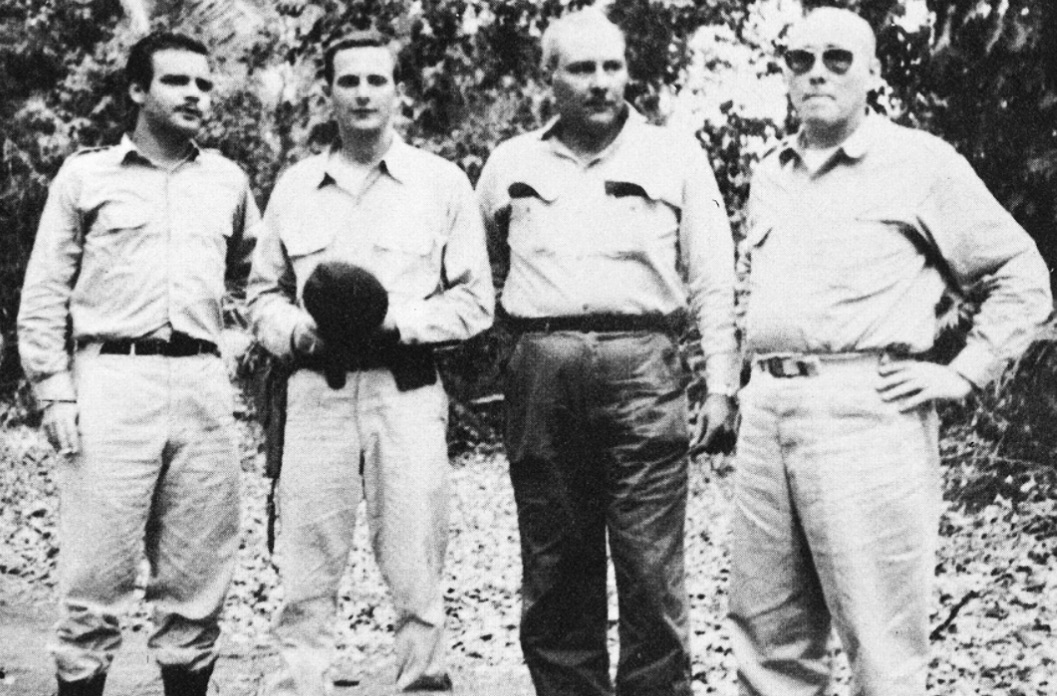
Within a month of the disastrous Bay of Pigs invasion, William Douglas Pawley found a new leadership role for himself—negotiating the release of the Brigade 2506 members and their political leader Manuel Artime (far left in photo next to the invasion ground Commander Jose Perez "Pepe" San Roman, the CRC's Antonio Maceo, and DRE founder Manuel Antonio de Varona).
                                                                   
Pawley along with Assistant Director of Immigration and Naturalization Lou Gidel and representatives of the FRD met on May 20, 1961, at the home of Cuban Revolutionary Council (CRC) leader Dr. Jose Miro Cardona whose knowledge of Cuban law was grounded in being the former President of the Cuban Bar Association. Also in attendance was Christian Democratic Movement (MDC) leader Jose Ignacio Agusto Rasco Bermudez (cryptonym AMPALM-5) who had been president of his university’s debating society.

While the CRC was meant to unite the various Cuban exile factions, an odd wedge appeared less a year later when Dr. Miro received a letter from Madrid, Spain written to newspaperman Norman Diaz. “I am sending you these lines to acquaint you with the fascist movement which was founded in Spain and Italy and called Opus Dei which is moving in the political sphere of the political refugees in Miami.” The movement of “industrialists, merchants, professional people and elements of the extreme right” is close to Franco and “in Miami is represented by Fernandez Varela, the ‘little priest’” who is struggling “for control of the organization” with “Dr. Lasaga, who is a member of the Revolutionary Council in Miami.” The DRE “whose base is the University [of Havana] Catholic action, is involved in the fascist organization and its representatives in Miami.” Dr. Miro told his CIA contact that he “looked upon this letter as merely speculation of one person.”2

Richard Scully Cain (aka Richard Scalzetti), a former Chicago policeman turned private eye “was hired as a bodyguard for Jose Rasco during a visit to Chicago.” Months earlier, Cain had contacted the CIA’s Chicago Domestic Contact Division “Field Office and voluntarily provided information on the activities of Cuban exile groups in the Chicago area.” Following his service to Rasco, in April 1962, “Cain made an unannounced visit to Agency representative Winston Scott and Warren Dean in Mexico City” and claimed he was providing “police training to Mexican Government agents.” Two months later he was deported “for carrying a loaded revolver and brass knuckles, impersonating a Mexican Government official, and violating his tourist permit by working.”

At the May 1961 Rasco/Cardona meeting, attendees “chose spokesman on spot. Pawley will identify later.” They learned that Castro “said that feeding and housing 1214 prisoners plus 800 guards was heavy economic burden he wished to shed” in exchange for multiple ferryloads of tractors and spare parts that would last five years, a burdensome process Miro proposed to avoid Castro reneging on the agreement. “Pawley suggested to Miro this process might be streamlined and speeded by letting Canadian gov’t supervise exchange.”

After the meeting, Pawley heard the delegates comment that the brigade prisoners “are proud to have fought in the first armed battle of the free world against communism” and desire “to go back again with the experience and self-confidence they have gained from the invasion.” And despite their quick capture, Pawley reported that the “Training they received in camps and execution of amphibious landing were superb.”3

Luce’s Time magazine reported on June 2, 1961, that Castro’s ransom demand included heavy tractors. To pay for them, JFK urged former first lady Eleanor Roosevelt, United Auto Workers' President Walter Reuther and Dr. Milton Eisenhower to do fundraising. William D. Pawley contributed $25,000. On the West Coast, John (“Jake the Barber”) Factor of Los Angeles, “a Prohibition-era hoodlum who got kidnaped [sic] by other hoodlums in 1933 and knows all about ransoms sent $25,000.” But not everyone thought it was a good idea. Connecticut's Democratic Senator Thomas Dodd worried that paying ransom would create a ripple effect leading to the Communists seizing a billion. Time painted the image of Castro pleasurably “guffawing through his beard.”4

Read more »

Labels: , , , , , , , , , , , , , , ,

44: Life and Death

On October 4, 1977, Bob Woodward, the Watergate reporter from The Washington Post spoke in New Jersey at Montclair State College (now a University) and bet the audience that no one could name all of the infamous Watergate burglars just five years after the crime. I won his $20 bet because my interest in JMWAVE and the anti-Castro Cubans associated with E. Howard Hunt, Frank Sturgis and William Pawley had been rising not waning during the investigations by the Rockefeller Commission, the Church Committee, the Pike Committee and the House Select Committee on Assassinations, between 1975 and 1978.

Those probes also were creating an intriguing cluster of dead fellows within the JMWAVE-AMSPELL-TILT milieu.1 Some were heart attacks, perhaps brought on by the stress of revelations of dark secrets. Some suicides. Some murders by shooting and car bombing.

On the morning of January 7, 1977, hours before Pawley took his own life, Juan Jose Peruyero “was shot twice in the back” as he left his home in Miami’s Little Havana “shortly after at 8 a.m.” Before he died at “Jackson Memorial Hospital,” Peruyero said he knew who fired the shots, but the assailant in the passing “1967 Cadillac” was never prosecuted, and it has remained a cold case for decades. He “was the seventh exile leader to die in the last three years.”2

Read more »

Labels: , , , , , , , , , , , , , , , , , , ,