December 12, 2009

13: CIA Director Allen Dulles Survives the Doolittle Critique

Following Ike's meeting with the Doolittle Committee, a memorandum was written. When it was finally declassified, it confirmed the criticism of CIA Director Allen Dulles that I had heard in my phone conversations with Morris Hadley and William Franke.  

Memorandum of Conversation

Washington, October 19, 1954.
The President saw General Doolittle and other members of the Committee appointed to investigate the activities of the CIA.
The report was presented by General Doolittle, who said they had gone over it with Allen Dulles for three reasons:

  1. (1)  to be absolutely fair;

  2. (2)  to study Mr. Dulles better to watch for his reactions to a report not wholly favorable;

  3. (3)  and their hope that the maximum good would come out of the report.

Mr. Dulles made several recommendations that were incorporated in the report. The President prefaced his remarks by saying that of course Mr. Dulles knew, as does everyone, that no two men would have the same judgments about certain things. That what we wanted to know was did we have a good man for the CIA head, and was he being selective and skillful in getting his assistants, and was his team working together in the best interests of the United States.

General Doolittle emphasized that the report was constructive criticism and in no sense a white wash. Some of the recommendations were very technical.

About Dulles: his principal strength is his unique knowledge of his subject; he has his whole heart in it, his life, he is a man of great honesty, integrity, loyally supported by his staff. His weakness, or the weakness of the CIA is in the organization—it grew like topsy, sloppy organization. Mr. Dulles surrounds himself with people in whom he has loyalty but not competence. There is a lack of discipline in the organization. There is a complete lack of security consciousness throughout organization. Too much information is leaked at cocktail party.

Read more »

Labels: , , , , , , ,

20: Hitmen

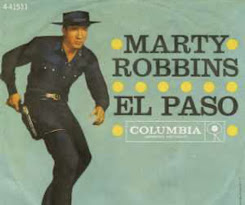
Before entering politics in 1945, Sen. Homer E. Capehart (R-Indiana) had been a highly successful businessman known as “the father of the jukebox industry.” Back then, a jukebox contained dozens of 45-rpm, 7-inch records that could be heard on a pay-for-play basis by depositing a coin and pushing buttons that corresponded to the song selection. Jukeboxes quickly became fixtures in diners, bowling alleys, military installations, laundromats, college campus lounges and other gathering spots. Record companies embraced them because this new platform provided another way for songs to get heard and for artists to become bigger stars, such as country & western singer Marty Robbins. In an age of 2 minute records, his 4-minute-38-second song about a gunslinger in the west Texas town of “El Paso” became a No. 1 hit while Pawley was planning Castro’s demise through his own hit squad. As for Capehart, he became an astute politician before losing his seat after three terms to Birch Bayh.1

In the spring of 1960, the CIA Deputy Director of Plans sent FBI Director J. Edgar Hoover a memo from the Department of State that remained classified until 2011 and was not released for several more years. In the memo, the U.S. Counselor of Embassy for Economic Affairs in the Dominican Republic reported that he had talked on February 23, 1960 to Wallace B. Rouse, a long-time construction engineer who had traveled a few months earlier to Ciudad Trujillo with Senator Homer E. Capehart (R- Indiana). The group had hoped to seal “a large business deal” that collapsed at the “last minute” when Generalissimo Trujillo called the group “‘thieves’” which greatly upset Rouse.

Rouse told the Senator that “Pedro Moreles (presumably an American citizen) was recently given $5,000 ‘earnest money’ in Miami as a downpayment to bump Castro off. Rouse implied this was arranged by [Arturo] Espaillat acting for Trujillo, and also implied that former U.S. Ambassador William Pawley was implicated.” After describing how Moreles would be smuggled into Cuba, Rouse stated that “William Pawley had asked him why he, Rouse, had not sent gunmen to kill Castro; and that Pawley told him if that didn’t work ‘he would send his own gunmen’ to do the job. On arrival in Port- au-Prince, the Embassy Administration Officer, unaware of the Rouse conversation, coincidentally said he had been seated next to William Pawley on a flight from New York to Port-au-Prince during which Pawley had made the identical remark to him.”2 Bold emphasis added by D.P. Cannon


Read more »

Labels: , , , , , , , , , , , , , , , , ,

26: Days of Swine and Rose's Boys: Bay of Pigs Invasion

Fear of retaliation was a concern as the CIA planned the demise of two Western Hemisphere leaders, Castro and Trujillo. According to the CIA’s Deputy Director for Support, Col. L.K. White, on March 22, 1961, the CIA’s Sheffield Edwards and Jack Earman met with CIA Deputy Director General Charles Cabell “to point out to them that we were not furnishing the Director the personal protection which we should be furnishing in these critical times.”1

On April 4, 1961, President John F. Kennedy, the first Catholic president whose mother, Rose, prayed the rosary throughout his life, heard about the “immorality” of an invasion of Cuba voiced by Senator William Fulbright, chairman of the Senate Foreign Relations Committee. While Fulbright “denounced the proposition out of hand,” Adolphe Berle declared his belief that “a ‘power confrontation’ with Communism in the Western Hemisphere was inevitable.” Assistant Secretary of State for Inter-American Affairs Thomas C. Mann, “who previously had been on the fence, now spoke up for the operation.”2 Rose’s son’s march toward disaster proceeded headlong with the momentum created by Pawley-intelligence-exile axis.

Pawley on April 15th sat down with FBI agents Leman L. Stafford, Jr. and George E. Davis, Jr. for an interview that Pawley had requested. He let them know he was “a personal friend of the Director of the FBI, as well as of President Eisenhower, former President Truman and many other influential people in the United States and Latin America.” Pawley then voiced “that he is deeply concerned about the communist trend in Cuba and its effects on other Latin American countries, and that he has been in close contact with the U.S. State Department and the CIA relative to the situation.”3

Manuel Ray Rivero “took the view that the internal resistance was so strong that Castro could be overthrown without an ‘invasion’ from the outside.” (In truth, there was only insignificant damage from the 110 insurgent bombings between October 1960 and April 17, 1961,4 when Jose A. Perez “Pepe” San Roman led the Bay of Pigs invasion.)5

Ray’s wishy-washy stance on the need for an invasion did not sit well with Pawley, and in the weeks before the invasion Ray complained that assertions that he favored Cuba maintaining relations with the U.S.S.R. “were not true and part of a ‘campaign against him by Mr. Pawley of the Miami City Transit Company.’”6

Despite the desire to make it look like a Cuban led invasion, among the first men ashore were two non-Cubans, Grayston L. Lynch (aka Gray) and William “Rip” Robertson, who had been among those suggested as possible assassins of Castro. Lynch, a fearless veteran of the D-Day invasion at Normandy Beach, the Battle of the Bulge, and Heartbreak Ridge in Korea, would survive the debacle at the Bay of Pigs and go on to direct and participate in hundreds of more clandestine operations against Cuba. A decade before dying in 2008, Lynch published his account of the invasion imbued with anger at the failure of the Kennedy Administration to provide the essential air cover titled Decision for Disaster: Betrayal at the Bay of Pigs. Rip Robertson’s passion for adventure ended a decade later when he “died in 1973 of malaria in Laos.”7

Read more »

Labels: , , , , , , , , , , , , , , , ,

32: "What it is ain't exactly clear"*

On October 4, 1963, The New York Times reported that Republican conservative candidate for President Barry Goldwater believed President Kennedy was helping the Soviets. The President was considering a wheat sale to the Russians, which former Vice President Nixon also spoke adamantly against asserting it would be “harming the cause of freedom.”1

Six days later, asserting it was good for the US economy, JFK announced his approval of the $250 million wheat sale to the Soviet Union while ruling out sales to Cuba and China. A schism between Red China and Russia had appeared at about the same time, and the intelligence and defense communities would debate whether it was real and or a treacherous ploy to deceive the United States.2

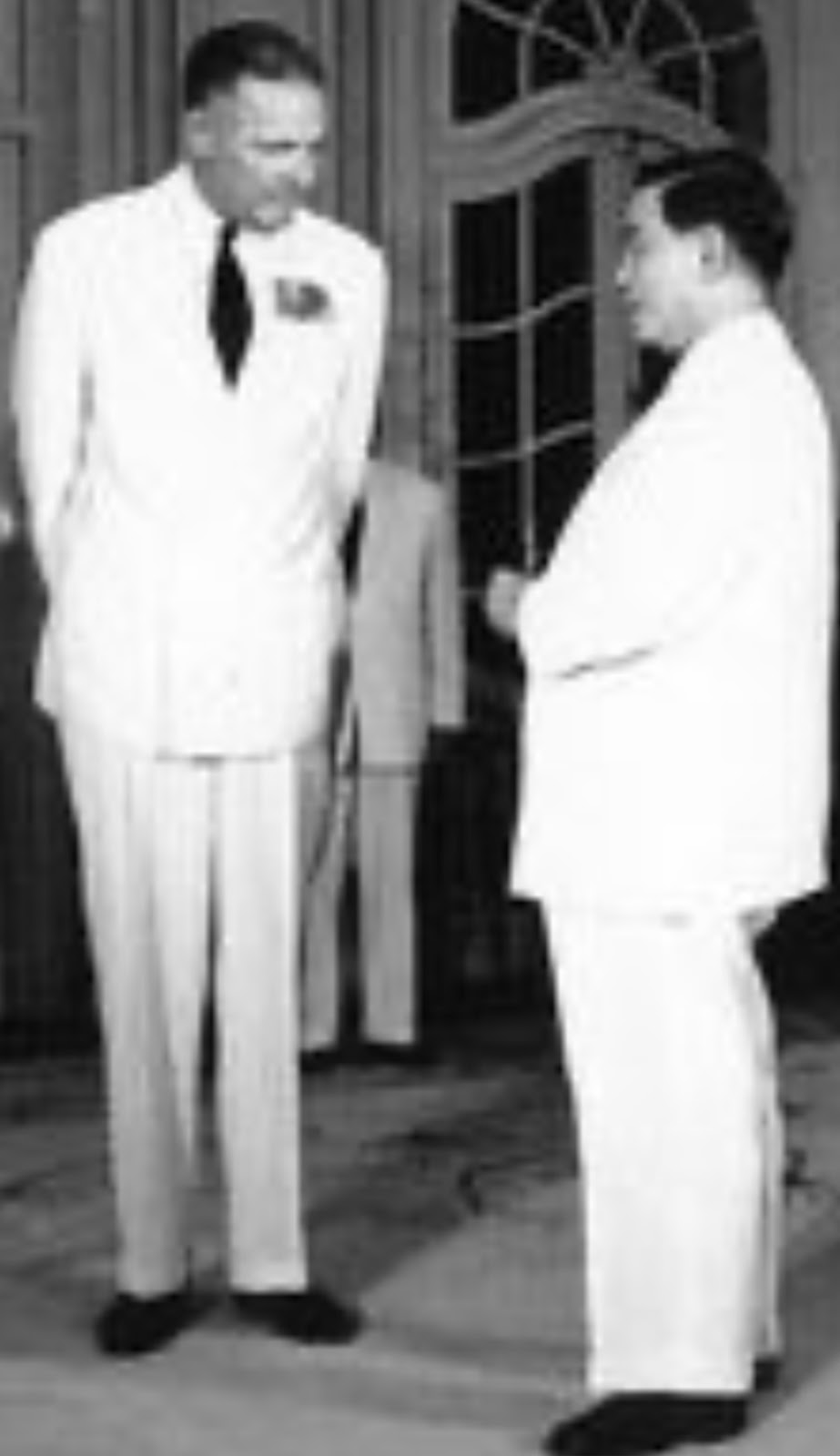
The President issued a denial that the CIA was pursuing an independent course in South Vietnam where a “serious disagreement over United States policies” had developed “between Ambassador Henry Cabot Lodge and the head of the Central Intelligence Agency there.” The New York Times had reported “that Mr. Lodge would be happier with a new C.I.A. chief.”3  The 6' 3" tall Lodge, also felt that South Vietnam President Ngo Dinh Diem should be overthrown by the country’s military because of his harsh treatment of the nation's Buddhists.4

Read more »

Labels: , , , , , , , , , , , , , , , , , , ,

41: Was Dallas A Target, Too?

Following his arrest at Watergate, Hunt released Give Us This Day, an autobiography detailing his role in the Bay of Pigs invasion. Hunt candidly states that his first recommendation to the agency after measuring Cuba’s social climate was to kill Castro. His superiors tried their best, but success eluded the CIA hit men run by William Harvey. Hunt characterizes General Charles Cabell as the man most responsible for the failure of the invasion, because Cabell waited for JFK’s order for a second air strike instead of initiating the order himself. Among those waiting for the order was Frank Sturgis.

The Washington Post reporters Woodward and Bernstein in All The President’s Men described Watergate burglar Hunt as a “psychological warfare expert.” In a second autobiography, Undercover: Memoirs of an American Secret Agent, E. Howard Hunt quotes Tacitus, a Roman emperor killed by his own soldiers whose brother is also slain by the soldiers. In a classic vendetta, revenge must combine both death and disgrace.

If a classicist, sought a vendetta against Charles Cabell and President Kennedy, the perfect place for the assassination would be Miami where the President had promised to the invasion brigade members that their flag would fly one day in Cuba.

If a Miami shooting was not possible, revenge would be sweet in Dallas, where General Charles Cabell’s brother, Earle, was Mayor as part of a long family tradition. For 90 years the Cabell family had been intertwined with running the city and criminal justice in and around Dallas:1

  • 1874-1876 Mayor William L. Cabell

  • 1877-1879 Mayor William L. Cabell

  • 1883-1885 Mayor William L. Cabell (became a U.S. Marshall)

  • 1900-1904 Mayor Ben E. Cabell (previously Sheriff)

  • 1961-1964 Mayor Earle Cabell2 (previously President of Dallas Crime Commission)

Read more »

Labels: , , , , , , , , , , , , , , , , , , ,