When one looks at the supposed loner, Oswald, you don’t find a Unabomber-type recluse
who hides in the woods from civilization, only emerging when he wants to strike out at
perceived enemies. Instead, you see a young man who joined organizations such as the Civil Air
Patrol in 1955 and the U.S. Marines in 1957. While stationed as a radar operator in Japan where
the CIA launched U-2 planes to spy on Russia, he learned a second language, Russian, not so he
could talk to himself in two languages in loneliness.3
Oswald then infiltrated Russia, and upon his return to the U.S. did not undergo the
polygraph examination and 30-day debriefing that Pawley’s Soviet defectors were going to face
in Operation TILT. In fact, there was no arrest for treason despite Oswald having supposedly
shared top-secret information with the Russians.

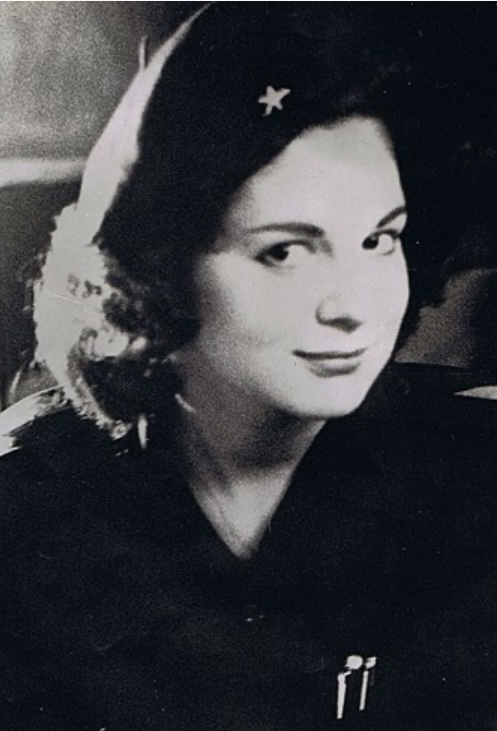
In the wilderness of mirrors that was James Jesus Angleton's counterintelligence world, June Cobb appeared. Cobb was a drug trafficker in the early 1950s with her Colombian boyfriend. By the end of the decade, the adventurous, attractive blonde was in Cuba supporting Fidel Castro's movement against Batista and she translated Castro's famous "History Will Absolve Me" speech into English. After Castro cooled to her, June Cobb helped former leftwing Guatemalan President Juan Jose Arevale translate his book, The Shark and the Sardines, into English. In the metaphor, it is hard for sardine nations such as Guatemala to negotiate with a much larger sharks like the U.S. which support the interest of big corporations. The sardines just get eaten as happened to Arbenz when the CIA and Pawley took the side of United Fruit. The Shark and the Sardines was the last book Oswald checked out of the library. Was it a coincidence or something else? Despite her left-leaning credentials, June Cobb entered the anti-Castro CIA in 1961with the cryptonym AMUPAS-1. She explored the Fair Play for Cuba Committee prior to Oswald's faux membership. In September 1962, her cryptonym was changed to LICOOKY-1 (aka LICOOKIE) and she was sent to Mexico City to work with the likes of CIA Station Chief Winston Scott and his Cuban Desk head David Atlee Philips. She was there when Lee Harvey Oswald arrived in the city purportedly attempting to get into Cuba in an effort to return to Russia. Cobb even learned of Oswald's interactions with Sylvia Duran, the Mexican native at the Cuban consulate who interacted with Oswald concerning his travel plans. After the JFK assassination, Duran's friend Elena Garro de Paz, wife of writer Octavio de Paz, tried to make sure investigators knew Oswald had been seen with Duran at a twist party giving rise to the possibility of conspiracy (rather than the possibility that Duran was trying to determine Oswald's real intention). Cobb tried to quash Garro's assertion.
Years later when the State Department's Charles Thomas--transferred from Haiti to Mexico City--tried to elevate awareness of the sighting as proof Oswald was part of a Castro conspiracy. He was told to speak to Cobb's superior James Jesus Angleton who did not want Americans questioning the lone-nut assassin conclusion. Thomas died by suicide April 12, 1971. That same month Winston Scott dropped dead after Angleton read his autobiography manuscript.
In January 2024, JFK Facts reporter Jefferson Morley interviewed Mary Haverstick, author of A Woman I Know: Female Spies, Double Identities and a New Story of the Kennedy Assassination. She detailed to him how her film documentary about astronaut-in-training Jerrie Cobb evolved into a biography about her other possible identity, the cold-as-ice-CIA-asset June Cobb. Cobb admitted to having sat on the runway at Redbird Airport--9 miles from Dealey Plaza--on November 22, 1963 after delivering a Life magazine crew from Miami to cover the day's events. But was this true? Life took no photos that day; it bought the Zapruder film. Jerrie Cobb did have a relationship with Luce's Life having been featured in its pages on August 19, 1960 under the headline "A Lady Proves She's Fit for Space Flight."
Coincidentally when Haverstick mentioned that her mom's first husband had been shot down twice as a Flying Tiger and that "Catherine Taafe was a real fangirl of the Flying Tigers" aviatrix Jerrie Cobb demonstrated that she "was extremely well-versed in the geopolitical nuances of the entire China-Burma region" as well as the activities of the Flying Tiger pilots. According to Anthony Carrozza's book on Pawley (page 234), "Catherine Taaffe, who worked
for Castro but passed information to the CIA, told her contact there was widespread
belief in Cuba that the United States was sponsoring anti-Castro plots. Further, 'one of those responsible for this belief appeared to be Edward P. Pawley [a hand-written note in the margin reads “probably Wm. D. Pawley”] who . . . encourages
the belief that CIA is backing anti-Castro plotting and that he, Pawley, is working
for CIA in this effort.'” Oddly, June Cobb also had worked for Castro before getting cozing up to the CIA.
Haverstick pondered if June Cobb was the inspiration for the Oswalds naming their daughter June because no relatives had that name. But at the time of June Oswald's birth, June Cleaver was the beloved mom on the popular Leave It To Beaver TV comedy series, June Allyson had her own TV series, and June Carter performed with her family at Nashville's Grand Ole Opry where she caught the eye of Johnny Cash and eventually helped him walk the line to greater fame -- his fireplace mantle held gold records (commemorating a million albums sold) which I saw while waterskiing past Cash's home on Tennessee's Jackson Lake in the summer of 1969 with my University of Miami classmate, Del Bryant, whose dad, Boudleaux, wrote hit songs for the Everly Brothers recorded at Monument Records run by Fred Foster who was steering the boat.
The purported group of plane passengers in Cobb's claim is revealing. Life reporters went on raids with DRE ani-Castro Cubans, and Life was involved with William Douglas Pawley as recently as June 1963 in Operation TILT. Moreover, DRE members were the springboard for elevating awareness of Oswald as a communist and the centerpiece of Life's Clare Boothe Luce's 1975 confessional phone call to CIA Director Colby (Chapter 42: Luce Lips). Haverstick notes that in the summer of 1963, Luce had penned "a blistering op-ed" supporting the Mercury 13 astronaut program in which Jerrie Cobb was a member and that the CIA approved contact between its ZR/RIFLE assassination planner, Rome Chief of Station William King "Bill" Harvey and Luce, the former Ambassador to Rome.
Silvia Odio, a Dallas resident, claimed that Oswald visited her home on September 26 or 27 of 1963 and discussed plans to kill JFK with two other men. The Warren Commission said she was mistaken because Oswald was on his way to Mexico. It was a doppelganger William Seymour, along with Larry Howard and Loran Eugene Hall, soldiers of fortune involved in anti-Castro activities. Either Odio was wrong or the CIA Mexico City Station group of Scott-Philips-Cobb was seeing a double. Coincidentally during testimony to the House Select Committee on Assassinations, Hall who had befriended Jim Garrison following his March 1, 1967 (my 21st birthday) indictment of Clay Shaw admitted that he had not mentioned to Garrison the Bayo-Pawley Operation TILT which had Hall had initially been involved in but missed the boat.
In 1994, FBI Special Agent James Hosty, who wrote reports on Oswald's activities, told John Newman, the author of Oswald and The CIA, that Odio's visitors might have been Pawley's men. "H.L. Hunt was backing Pawley's people, and they were also getting support from Henry Luce. It could be that Pawley's guys spying on JURE [Junta Revolutionaria Cubana, led by Amador Odio]."
Newman's book, also relates how West Point cadet Douglas K. Gentzkow turned over documents being gathered by Stork Club owner Sherman Billingsley to the CIA's Domestic Contact Division. "Gentzkow's papers also surfaced in William Pawley's files." The documents were intended to be used as leverage to get an investigation into the disappearance of Alexander Rorke who--along with Marita Lorenz--had spoken to June Cobb. "The name of June Cobb as a double agent appears in the Rorke papers." Cobb had forced Lorenz to abort Fidel Castro's love child.