December 12, 2009

20: Hitmen

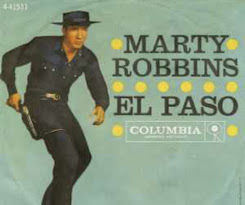
Before entering politics in 1945, Sen. Homer E. Capehart (R-Indiana) had been a highly successful businessman known as “the father of the jukebox industry.” Back then, a jukebox contained dozens of 45-rpm, 7-inch records that could be heard on a pay-for-play basis by depositing a coin and pushing buttons that corresponded to the song selection. Jukeboxes quickly became fixtures in diners, bowling alleys, military installations, laundromats, college campus lounges and other gathering spots. Record companies embraced them because this new platform provided another way for songs to get heard and for artists to become bigger stars, such as country & western singer Marty Robbins. In an age of 2 minute records, his 4-minute-38-second song about a gunslinger in the west Texas town of “El Paso” became a No. 1 hit while Pawley was planning Castro’s demise through his own hit squad. As for Capehart, he became an astute politician before losing his seat after three terms to Birch Bayh.1

In the spring of 1960, the CIA Deputy Director of Plans sent FBI Director J. Edgar Hoover a memo from the Department of State that remained classified until 2011 and was not released for several more years. In the memo, the U.S. Counselor of Embassy for Economic Affairs in the Dominican Republic reported that he had talked on February 23, 1960 to Wallace B. Rouse, a long-time construction engineer who had traveled a few months earlier to Ciudad Trujillo with Senator Homer E. Capehart (R- Indiana). The group had hoped to seal “a large business deal” that collapsed at the “last minute” when Generalissimo Trujillo called the group “‘thieves’” which greatly upset Rouse.

Rouse told the Senator that “Pedro Moreles (presumably an American citizen) was recently given $5,000 ‘earnest money’ in Miami as a downpayment to bump Castro off. Rouse implied this was arranged by [Arturo] Espaillat acting for Trujillo, and also implied that former U.S. Ambassador William Pawley was implicated.” After describing how Moreles would be smuggled into Cuba, Rouse stated that “William Pawley had asked him why he, Rouse, had not sent gunmen to kill Castro; and that Pawley told him if that didn’t work ‘he would send his own gunmen’ to do the job. On arrival in Port- au-Prince, the Embassy Administration Officer, unaware of the Rouse conversation, coincidentally said he had been seated next to William Pawley on a flight from New York to Port-au-Prince during which Pawley had made the identical remark to him.”2 Bold emphasis added by D.P. Cannon


Read more »

Labels: , , , , , , , , , , , , , , , , ,

44: Life and Death

On October 4, 1977, Bob Woodward, the Watergate reporter from The Washington Post spoke in New Jersey at Montclair State College (now a University) and bet the audience that no one could name all of the infamous Watergate burglars just five years after the crime. I won his $20 bet because my interest in JMWAVE and the anti-Castro Cubans associated with E. Howard Hunt, Frank Sturgis and William Pawley had been rising not waning during the investigations by the Rockefeller Commission, the Church Committee, the Pike Committee and the House Select Committee on Assassinations, between 1975 and 1978.

Those probes also were creating an intriguing cluster of dead fellows within the JMWAVE-AMSPELL-TILT milieu.1 Some were heart attacks, perhaps brought on by the stress of revelations of dark secrets. Some suicides. Some murders by shooting and car bombing.

On the morning of January 7, 1977, hours before Pawley took his own life, Juan Jose Peruyero “was shot twice in the back” as he left his home in Miami’s Little Havana “shortly after at 8 a.m.” Before he died at “Jackson Memorial Hospital,” Peruyero said he knew who fired the shots, but the assailant in the passing “1967 Cadillac” was never prosecuted, and it has remained a cold case for decades. He “was the seventh exile leader to die in the last three years.”2

Read more »

Labels: , , , , , , , , , , , , , , , , , , ,

47: Timeline

1864 ~ Edward Porcher Pawley born.

1890 ~ Edward marries Mary Irene Wallace.

1893 ~ George Plummer Pawley born. 

1896/9/7 ~ William Douglas Pawley born in Florence, South Carolina.

1899 ~ After the Spanish American War when Teddy Roosevelts “Rough Riders” help liberate Cuba from Spain, Pawley spends his early childhood at Guantanamo Bay Naval Station where his father had a store, earning him the nickname “Cuba” from classmates at Gordon Military Academy in Georgia.

1925/5/20 ~ Gerardo Machado becomes the 5th President of Cuba. He is overthrown in 1933.

1928 ~ William Douglas Pawley creates Cubana National Airlines which is sold to Pan American Airlines in 1932.

1929 ~ China Airways financed by Curtiss-Wright and controlled by Clement M. Keys begins flying mail from Shanghai to Hankow, Peiping and Canton. With pressure from the government, it evolves into China National Aviation Corporation (CNAC).

1932 ~ William Pawley establishes Intercontinent Corporation run by him and his brothers Edward and Eugene.

1933 ~ Pawley becomes President of China National Aviation Corporation.

1936 ~ William's oldest brother, George Plummer Pawley, dies.

1940/12/23 ~ Pawley partners with India in establishing Hindustan Aircraft Limited near Calcutta (Bangalore).

1941 ~ Pawley begins China Aircraft Manufacturing Company CAMCO to manufacture planes for the American Volunteer Group (The Flying Tigers headed by General Clair Chennault) to defend Chiang Kai-shek’s Nationalists against Japanese planes. CAMCO airplane assembly plants moved from Hangzhou to Wuhan to Lowing (on the China-Burma border) to India. 

1941/9 ~ David Harold Byrd, wealthy oil man and owner of the Texas School Book Depository in Dallas, co-founds the Civil Air Patrol to watch for enemy submarines and border crossings as well as enemy aircraft over the U.S. and provide other civilian support for the U.S. Army Air Force. Byrd is a cousin of Antarctic explorer Richard Byrd and West Virginia politician Harry F. Byrd. 

1942 ~ CNAC operates out of Calcutta until 1945.

1943 - E. Howard Hunt, Jr. serves as a wartime intelligence officer in China.

1945/7/20 ~ Pawley becomes U.S. Ambassador to Peru.

1945/10/13 ~ Carlos Prio Socrarrás becomes 5th Prime Minister of Cuba. 

1946/6/13 ~ Pawley becomes U.S. Ambassador to Brazil.

1947 ~ Antonio de Varona appointed leader of the parliamentary committee of his party under Prio. Previously, de Varona was involved in the overthrow of Gerardo Machado and was elected to the Cuban congress and the senate.

1948 ~ E. Howard Hunt, Jr. becomes spokesperson in Paris for the Marshall Plan's Economic Cooperation Administration. George C. Marshall and his wife are close friends of the Pawleys.

1948/10/10 ~ Carlos Prio becomes President of Cuba, succeeding Ramon Grau.

1949/9 ~ Pawley negotiates taking over the Havana trolley system.

1950/1 ~ Pawley runs Havana Autobuses Modernos, removing trolley car tracks. He also becomes a partner with John J. McCloy and others in Commerce International China.  

1950 ~ E. Howard Hunt becomes Chief of Station of the Office of Policy Coordination in Mexico City. 

1951/2/4 ~ Pawley's daughter, Annie Hahr, weds.

1951/2/19 ~ Pawley enters State Department as special assistant to Dean Acheson.

1951/6 ~ Pawley visits India re wheat and monazite.

1951/9 ~ Son, Clifton Pawley, dies in Mexico; William flies from Washington to Mexico City and Miami. 

1951/11/20 ~ Pawley resigns from State Department effective the 30th. 

1951/12/3 ~ Pawley enters Defense Department as special assistant to Lovett.

1952/1/17 ~ Pawley sails with Edna and Anita Pawley and his assistant Ed Harris to Europe; stays until May, but returns to Washington to settle a strike in Miami then flies to Lisbon Conference with Lovett and takes a two week trip for consultation with Defense Department.

1952/5 ~ Pawley resigns as assistant to Lovett.

1952/6 ~ At Belvoir House farm in Virginia.

1952/9 ~ Pawley in Europe and Middle East with Edna.   

1952/3/10 ~ Fulgencio Batista overthrows Prio; de Varona begins fight against Batista.

1953 ~ Pawley in Miami serving as owner president and general manager of the Miami Beach Railway Co. since 1941 and of Miami Transit Co. since 1948. Also owner of South Miami Coach Line and Tropical Coach Line Inc. and Grayline Sightseeing Co. of Miami.

1953 ~ William, Edward and Eugene Pawley develop oil and mining companies in Mexico.

1953/4/4 ~ CIA coup against Mossadegh in Iran (Operation AJAX) is hatched by Secretary of State John Foster Dulles, CIA Director Allen Dulles, Frank Wisner and Kermit Roosevelt, Jr.  Mossadegh is replaced by the Shah of Iran Mohammed Reza Pahlavi, coincidentally a former classmate of future CIA Director Richard Helms.

1954/6 ~ Pawley works with the CIA on PBSUCCESS, the overthrow of the Arbenz government in Guatemala. So does E. Howard Hunt, Jr.

1954/6 ~ William Pawley, William Franke, Morris Hadley and General Jimmy Doolittle appointed by President Eisenhower to review the Central Intelligence Agency. They recommend that the CIA become “more ruthless than the enemy.”

1955/7/27 ~ Lee Harvey Oswald joins the Civil Air Patrol in New Orleans which also includes Captain David Ferrie.

1956/10/24 ~ Oswald drops out of high school in Texas and joins the U.S. Marine Corps where he is trained as a sharpshooter.

1958/10/5 ~ Oswald is stationed at the Air Force base in Atsugi, Japan where the U.S. dispatches U-2 planes to spy on Russia. Oswald learns Russian.

1959/Spring ~ Oswald, back in the U.S., becomes friend of Kerry Thornley. 

1959/9/4 ~ Oswald applies for a passport a week before he is discharged from active duty in the Marine Corps.

1959/9/20 ~ Oswald departs the U.S. 

1959/10/2 ~ Pawley is given the CIA cryptonym QDDALE.

1959/10/15 ~ Pawley installs a tape recorder to tape discussions with Cuban exiles.

1959/10/31 ~ Oswald defects to the Soviet Union offers U-2 secrets.

1959/11/16 ~ Oswald interviewed by Priscilla Johnson.   

1959/12 ~ Pawley tries to convince Batista to step aside so an interim government could be put in place as a buffer against Castro.

Read more »

Labels: , , , , , , , , , , , , , , , ,