18: Controlling Cuban-Exile Chaos
Publicly Vice President Richard Nixon was asserting that the U.S. should take a hands-off approach to Cuba and hope for the best.1 But in fact, Nixon had been dealing with the issue of Castro since at least April 19, 1959, when he met with Castro and then “prepared a 4-page secret memorandum and sent out copies to President Eisenhower, Secretary Herter and to Allen Dulles.” Herter was serving as Secretary of State in place of an ailing John Foster Dulles who coincidentally was hospitalized at the same time as former Secretary of State George C. Marshall. Dulles died May 24, 1959, while Marshall passed October 16, 19592 leaving a hole in William and Edna Pawley’s personal lives and William’s sphere of influence.
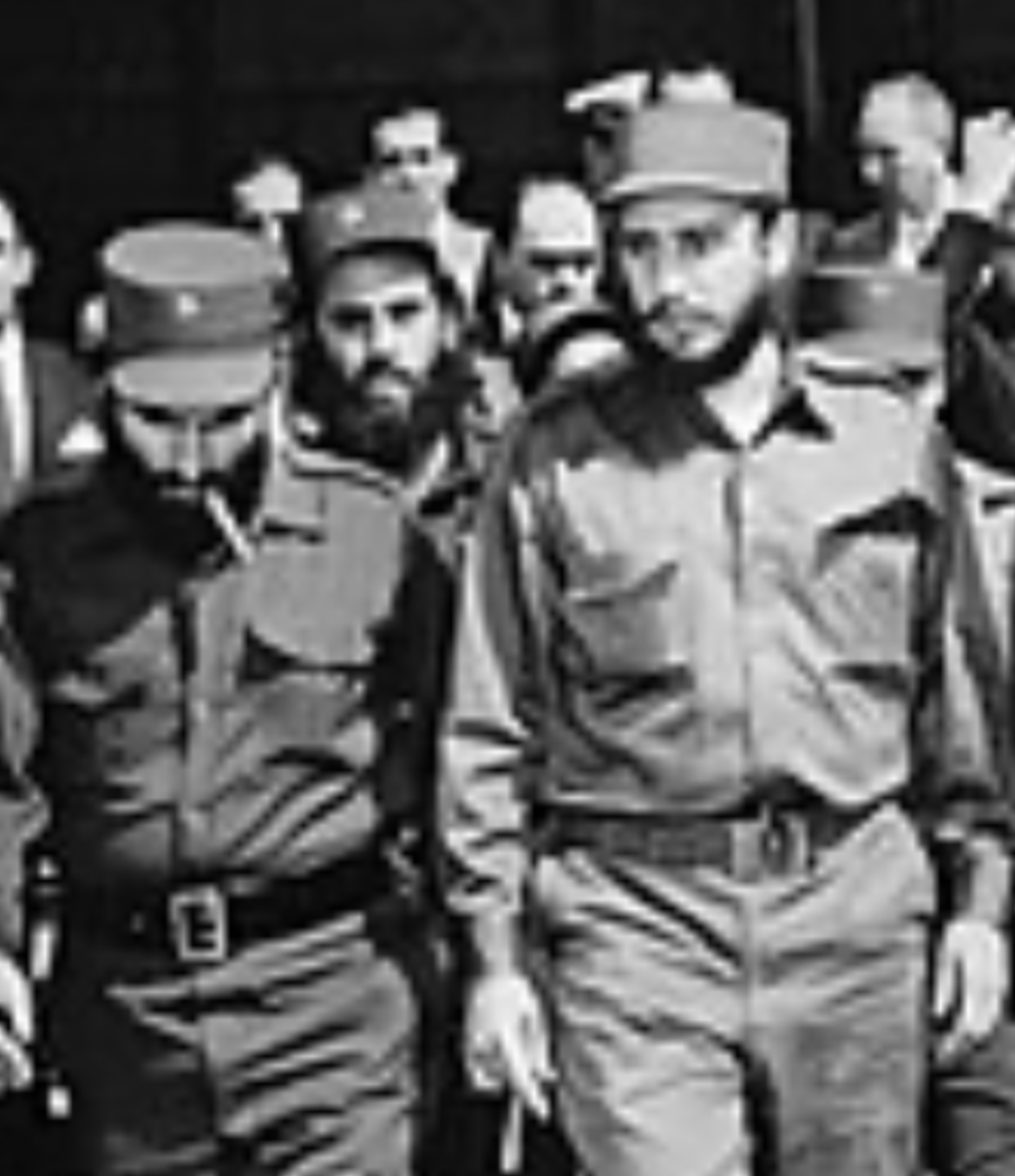
The tsunami of Cuban exiles arriving in the U.S. made that mission seem easy if someone could vet them to determine the best future political leaders and organize an effective fighting force.
On January 3, 1960, President Eisenhower announced that the U.S. was severing diplomatic relations with Cuba. On January 13th a Special Group meeting attended by CIA Director Allen Dulles and Livingston Merchant from the State Department discussed “Anti- Castro Activities.” With these actions and Eisenhower's March 17th approval of a plan to invade Cuba, he was in essence establishing an undeclared war that would hang like an albatross around Uncle Sam’s neck.
The CIA began dealing with Fidel on a formal basis on January 8, 1960, when Director Allen Dulles asked Deputy Director of Plans Richard “Dick” Bissell to organize a special task force. Ten days later the Western Hemisphere Division “organized Branch 4 (WH/4) as an expandable task force to run the proposed Cuban Operations” manned “with 18 at Headquarters, 20 at Havana Station, and 2 at Santiago Base.”
Heading WH/4 was Jacob “Jake” D. Esterline (aka Jacob Engler) who had gained “extensive guerilla warfare experience in World War II with the OSS” and was “one of the principals in Project PBSUCCESS” in Guatemala in 1954. “Esterline was the choice of J.C. King, Chief, WH Division.” As head of the WH/4 Cuban unit during the fifteen-month run up to the Bay of Pigs invasion, Esterline took his orders from the Deputy Director Plans Richard Bissell but frequently had direct contact with J.C. King and the Miami-based Cuban expert, William Pawley. Both were to be reckoned with because they “had known Republican Party affiliations.”4
King’s full role during the period and many interactions with Pawley will never be known. His papers that once filled eight safes—then only two—disappeared, according to an official history of the period.5
Labels: Arleigh Burke, Bissell, Castro, CIA, Cuba, David Philips, Desmond Fitzgerald, Dulles, Eisenhower, Esterline, Freyre, J.C. King, Nixon, Pawley, QDDALE, Tamayo, Tharpe, Tracy Barnes, Trujillo, Varona
posted by David Price Cannon @ 2:31 PM