December 12, 2009

16: Find Me Someone to Kill Castro

Pawley’s reaction to Castro taking control of Cuba was filled with thoughts of violence. Not only did it threaten his investments but embarrassed him personally by showing the folly of his buffer-government plan. He told a reporter in Miami that he would personally pay any amount to anyone who assassinated Castro. Then retracted his angry comment within days. In lieu of contracting an assassin, he began helping CIA Director Allen Dulles organize thousands of exiles fleeing Cuba to make sure the communist rebels in Cuba would be confronted by a force more ruthless than the enemy.1

On February 23, 1959, CIA Director Allen W. Dulles wrote to Pawley, thanking him for his good letter of February 18. “J.C. [King] has brought me up to date on his recent talks with you. As you know, we are running into difficulties in finding a resting place for the person about whom you telephoned me but I shall be working with State on that. I shall speak to Foster about your letter when next I see him. I know he will sincerely appreciate your thoughts. On a whole, he is making as good progress as could be expected and well tolerating the treatment he is receiving.”

In April 1959 Castro visited the United States for eleven days, giving the most optimistic Americans hope that he would not become a total surrogate for the Soviet Union.2 But when Castro returned to Cuba, he put a limit on private land holdings with the state expropriating the remainder under a policy of Agrarian Land Reform. That summer, President Urrutia resigned, and Osvaldo Dorticos Torrado became the country's president.3

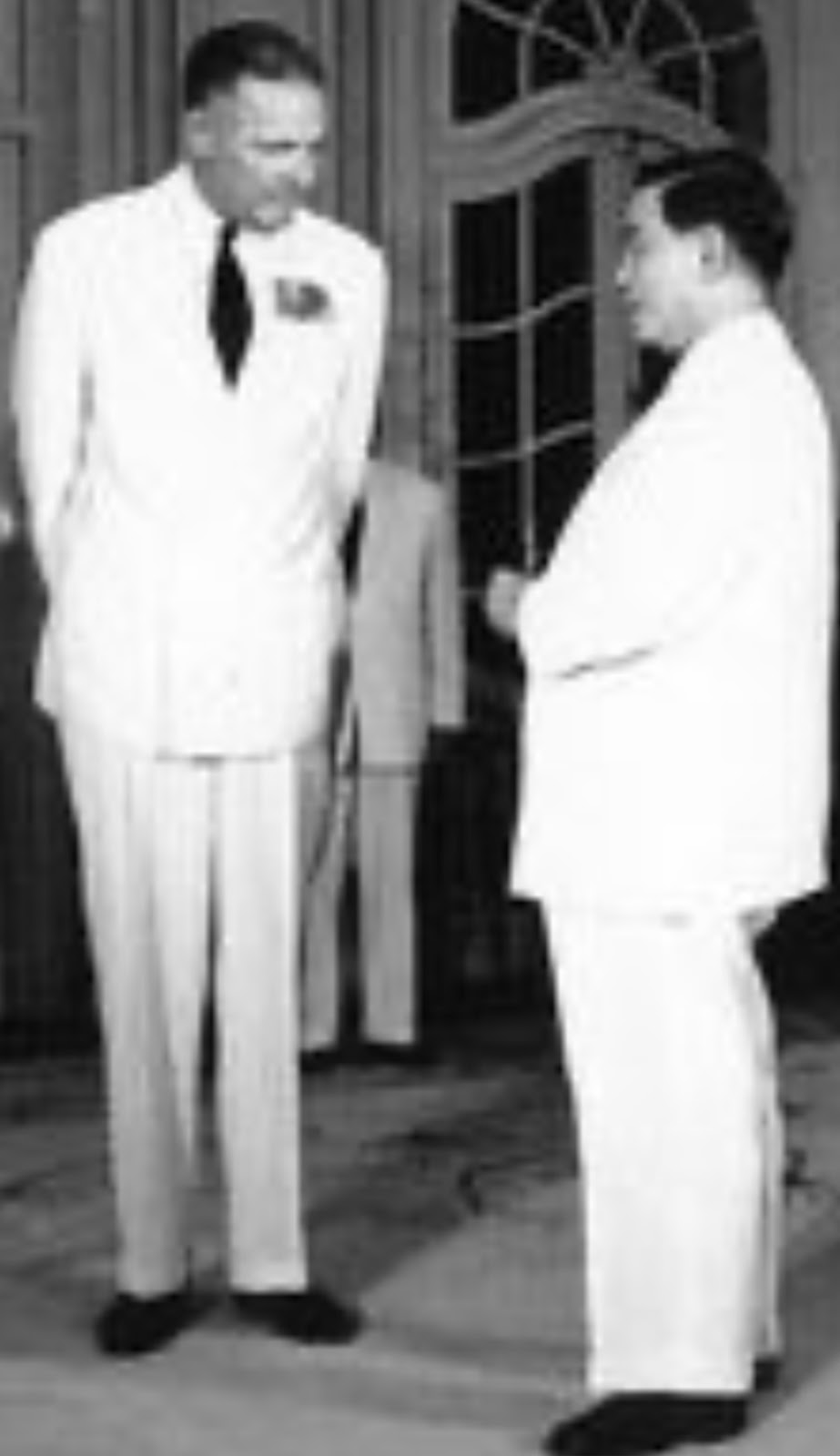
On July 27, 1959, Marcos Diaz Lanz (MDL), who was on Raul Castro’s list of government officers to be purged, escaped from Cuba to Florida with the assistance of Bernard Barker (right in photo) who earlier had transferred Marcos to a CIA safehouse in Cuba. Three weeks later, Marcos was “living in Fiorini’s house” in Florida while Barker remained in Cuba for another six months. After finally arriving in Miami, Barker and Frank Fiorini (aka Frank Sturgis; left in photo) would take part in numerous attempts to overthrow the Castro brothers. (A dozen years later, Sturgis and Barker would be arrested with E. Howard Hunt, Virgilio Gonzalez, James McCord, Jr., and Eugenio Rolando Martinez after a break-in at the Democratic National Headquarters in the Watergate Hotel in Washington, DC.)4

Read more »

Labels: , , , , , , , , , , , , , , , , ,

29: Strange Dreadfellows: Citizens Committee for a Free Cuba

On December 29, 1962 at the Orange Bowl in Miami, President Kennedy told Manuel Artime (center) and other Brigade 2506 members that their "flag will be returned to them in a free Havana." The attendees clapped and cheered believing JFK was prepared to go to war. 

But as 1963 unfolded, a more diplomatic approach was taking place, involving negotiations with Cuba and the Soviet Union. Soon a group of prominent U.S. citizens decided it was time to turn up the heat on Kennedy. Freedom House, headed by Leo Cherne called upon Americans on March 25, 1963, to unite in a movement for a Free Cuba, without communist influence.1 In May, his rallying cry would lead to the formation of the Citizens Committee for a Free Cuba. Cherne himself had been trying, like Pawley, to organize exiles for several years.2

Politically, Cherne had begun as a Wendell “Willkie Republican.” Willkie had switched from Democrat to Republican in 1939 as Hitler moved across Europe. With conservative Republicans viewing him as an “internationalist,” he lost the 1940 Presidential election to the re-elected Democrat Franklin W. Roosevelt. Willkie then helped Roosevelt push through the Lend-Lease policy to aid Great Britain and the Allied nations. Before dying in 1944, Willkie also served as FDR's liaison to Chiang Kai-shek which reportedly evolved into an affair with Madame Chiang. At the same time, Mrs. Willkie became a member of The Committee to Defend America by Aiding Anti-Communist China along with Clare Boothe Luce.

As director of the Willkie Memorial, Leo Cherne undoubtedly knew Willkie’s aide-decamp, Lamoyne (Lem) Jones, who in the 1960's became spokesman for the CIA's Cuban Revolutionary Council.3

Cherne in 1951 received “Covert Security Clearance to provide cover under Project BLANKET”—a program permitting “the subject to receive information about National Security Council 5412/2 matters on a need-to-know basis.” The CIA viewed individuals with international contacts as assets that could be tapped for gaining foreign country insights and for making contacts with potential informants, opinion influencers and future leaders. In 1954, Cherne received “Covert Security Clearance for use by Central Cover Division in providing cover under Project QKENCHANT.”4 This provided “Provisional Covert Security Approvals (PCSA) and Covert Security Approvals (CSA), with the Office of Security in connection with acquisition of Corporate Cover for Action.”5

A 1952 memo about using the Research Institute of America to provide cover for agents revealed that “Leo Cherne and Carl Novgard have been given covert operational clearances.”

Within less than a week of President Kennedy cutting funds to the Cuban Revolutionary Council, newspapers announced the establishment of the Cherne’s Citizens Committee for a Free Cuba (CCFC), comprised of prominent Americans with backgrounds in the academia, the military, news, labor, science, religion, government, and other walks of life.

Lyle C. Wilson’s article in The Oakland Tribune referred to it as a blue-ribbon committee on Cuba and stated the “CCFC is nonpartisan.” Its sponsors intended “to develop considerable political muscle, however” and had already developed an eight-page mimeographed pamphlet. The organization’s Executive Secretary, Daniel James, was listed as Editor in 19636 and served until Paul Bethel became Editor the following year. Bethel was a friend of the CIA’s anti-Castro propagandist in Mexico, David Phillips, who oversaw the activities of the exile student movement, Directorio Revolutionario Estudiantil (DRE), which the agency referred to by the cryptonym AMSPELL, according to Jefferson Morley’s Our Man in Mexico: Winston Scott and the Hidden History of the CIA.7

The Free Cuba News (FCN) Vol. 1, No. 1 pamphlet dated May 4, 1963, stated that the Citizens Committee for a Free Cuba saw an urgent need for an effective U.S. Cuban policy embracing a method of freeing the island from communism.” Adding to the dread of communism in Cuba was the assertion that “the enslavement of 6 million Cubans may now lead to the enslavement of 200 million persons in the remaining 19 Latin American republics” which is “wholly part of an offensive designed to enslave the United States.”

The pamphlet also promised a “punishing non-partisan attack” on President Kennedy whom “does not now have an effective U.S. Cuban policy.” The group believed it could rally Democrats against JFK, noting that it was “evident that the 1964 Republican presidential and congressional campaigns will make Cuba a major issue.”

The first issue of FCN further asserted that the overall situation in Latin America is much worse than the American people realize. “What CCFC is trying to tell Americans is not merely that it can happen here but that it probably will happen here unless Americans move to defend themselves now.”8

The American public however had faith in JFK’s handling of the Cuba situation. Nearly six out of ten polled believed that a war over Cuba in the next five years was unlikely.9

Among the fear-mongering Citizens Committee for a Free Cuba sponsors listed were former Bay of Pigs invasion co-planner, Admiral Arleigh Burke, and Pawley’s old friend Clare Boothe Luce.10

At the time that the CCFC was formed, the public would not know that Luce, Leo Cherne, Jay Lovestone, Irving Brown and Ernest Cuneo, had connections with the CIA. Nor would many be aware that Cherne, Luce, Lovestone, Christopher Emmet, Dr. Sidney Hook, Sal B. Hoffman, and Edgar Ansel Mowrer had previously supported the pro-Chiang Kai-shek China Lobby11 that had long benefited from Pawley’s activism. Two decades earlier, Mowrer had been the reporter who was hired to draft a final report for “Colonel William J. Donovan, U.S. Coordinator of Information concerning a mission to the Far East in autumn of 1941” prior to setting up a U.S. intelligence infrastructure there after getting input from Colonel Chennault of the Flying Tigers.12

Read more »

Labels: , , , , , , , , , , , , , , , , , ,

32: "What it is ain't exactly clear"*

On October 4, 1963, The New York Times reported that Republican conservative candidate for President Barry Goldwater believed President Kennedy was helping the Soviets. The President was considering a wheat sale to the Russians, which former Vice President Nixon also spoke adamantly against asserting it would be “harming the cause of freedom.”1

Six days later, asserting it was good for the US economy, JFK announced his approval of the $250 million wheat sale to the Soviet Union while ruling out sales to Cuba and China. A schism between Red China and Russia had appeared at about the same time, and the intelligence and defense communities would debate whether it was real and or a treacherous ploy to deceive the United States.2

The President issued a denial that the CIA was pursuing an independent course in South Vietnam where a “serious disagreement over United States policies” had developed “between Ambassador Henry Cabot Lodge and the head of the Central Intelligence Agency there.” The New York Times had reported “that Mr. Lodge would be happier with a new C.I.A. chief.”3  The 6' 3" tall Lodge, also felt that South Vietnam President Ngo Dinh Diem should be overthrown by the country’s military because of his harsh treatment of the nation's Buddhists.4

Read more »

Labels: , , , , , , , , , , , , , , , , , , ,

33: Shockwaves

The Kennedy assassination shook the nation, but one of JFK’s friends took it harder than others. When Edward Grant Stockdale’s Irish eyes stopped smiling there may have been more to his depression than was ever revealed.

Stockdale was the former U.S. Ambassador to Ireland. On November 26th, he flew to Washington and talked with Robert Kennedy and Edward Kennedy. Upon his return to Miami, Stockdale told several of his friends that “the world was closing in.” On December 1st, he spoke to his attorney, William Frates, who later recalled their conversation. “He started talking. It didn't make much sense. He said something about ‘those guys’ trying to get him. Then about the assassination.” William Snow Frates and his partners, Peter Thorp Fay and Robert Lester Floyd, coincidentally were the subjects of a December 6th memo seeking CIA covert security approval for the three attorneys “who will be used as officers in KUVEST” which appeared to be a funding mechanism “through notional companies for JMWAVE payroll companies.”1

On December 2, 1963, Grant Stockdale fell to his death from his office window on the thirteenth floor of the exquisite art deco Alfred I. duPont Building, Miami’s first commercial skyscraper at 169 East Flagler Street.2 The building lobby housed a major branch of Florida National Bank & Trust Co. headquartered in Jacksonville which Alfred duPont had purchased in 1929 and named his wife Jessie Ball duPont to the Board of Directors. Upon Alfred’s death in 1935, Jessie’s brother, Ed Ball, took charge of bank through his leadership of the Alfred I. duPont Testamentary Trust.

The Alfred I. duPont Building from which Stockdale plunged should not be confused with the DuPont Plaza Center building at 300 Biscayne Boulevard Way (U.S. 1), Miami, where Life magazine was located on the eighth floor. That building sat at a sharp turn in the road— similar to the Dealey Plaza presidential motorcade route—just before it turns past Bay Front Park where 15,000 family members and friends had gathered waiting for the return of the Cuban exiles involved in the Bay of Pigs invasion.3 Three decades earlier, five shots rang out in Bay Front Park shortly after President-elect Franklin Delano Roosevelt delivered a short speech. The disgruntled, lone-nut, would-be assassin Giuseppe Zangara missed Roosevelt, but five people were struck by bullets and Chicago Mayor Cermak would die later from complications. Zangara died in the electric chair just 14 days after Cermak died.

A rightwing plot—lead by Joseph Milteer of the National States Rights Party—to assassinate President Kennedy with a rifle from an office building in Miami on November 18th was publicly revealed in 1967 as I drove along S.W. 8th Street in Miami after eating breakfast at The Skillet. In 1963, the threat was taken seriously enough by the Secret Service that President Kennedy's motorcade was canceled and instead he and  Senator George Smathers were driven to a helicopter that flew them to Miami Beach where he delivered a speech to the Inter-American Press Association signaling a desire for peace in the Caribbean which was not what Pawley and Cuban exiles wanted to hear.5


JFK and Senator George Smathers at Miami International Airport 11/18/1963 awaiting a helicopter ride after cancelling a motorcade out of security concerns four days before Kennedy was assassinated 1,300 miles away in Dallas. (Photo: Joe Rimkus/State Archives of Florida)


According to FBI reports printed in Don Adams's From an Office Building with A High-Powered Rifle: A Report to the Public from an FBI Agent Involved in the Official JFK Assassination Investigation, the 62-year-old Joseph Adams Milteer from Quitman, Georgia who sometimes lived with a prostitute in Valdosta, Georgia believed John Kennedy, Nikita Kruschev, Martin Luther King and Jewish people were undermining America. (His patriotic zealotry didn't extend to what he drove: a 1962 Volvo and her Volkswagen.)  Milteer had inherited $200,000 from his father and spent it printing pamphlets spreading his segregationist point of view as a member of the White Citizens Council of Atlanta. He supported Strom Thurman for President in 1962 and attended a rally in Fort Lauderdale for Barry Goldwater shortly after revealing his belief that President Kennedy would be shot in Miami from building with a high-powered rifle. Coincidently, the Miami-Fort Lauderdale-Palm Beach Goldwater delegate and the honorary chairman of the Florida Republican Party campaign for Goldwater was William Douglas Pawley. FBI Special Agent Don Adams included in his book a reprint of a photo he had seen in the Harrison Edward Livingstone and Robert J. Groden book High Treason: The Assassination of JFK and the Case for Conspiracy which possibly shows Milteer at Dealey Plaza on November 22, 1963. The picture is odd because Milteer is in a short sleeve shirt while others wear coats and he is taller than many others despite his FBI reported height of 5'4". 

A December 2, 1963 Miami News report stated that Ambassador Grant Stockdale had looked at a Life magazine covering the Kennedy assassination."After smoking a cigarette, he lept out a window, "hitting a ledge eight floors below.” He was to have hosted Senator Ted Kennedy’s visit to Miami on the occasion of the University of Miami’s homecoming ceremony on December 14th. Stockdale was the chairman of the homecoming event, which was cancelled when he died.7 (In 1969, I received my AB degree in American Civilization from the University of Miami.)

Stockdale did not leave a suicide note but Miami Homicide Detective Robert Utes said Pawley’s friend, Senator George Smathers, who had an office in the same building, claimed that Stockdale had become depressed as a result of the death of John F. Kennedy. Stockdale had been Smathers’ administrative assistant in 1946. As word was being spread by the DRE that Oswald was associated with the Fair Play for Cuba Committee, no doubt Smathers recalled that his proposal to cut to U.S. sugar imports from Cuba by 10% was ridiculed in the FPCC's May 13, 1960 Fair Play newsletter under the headline "Sweetening the Bitter Tea of Senator Smathers."     

Read more »

Labels: , , , , , , , , , , , , , , , , , , ,

35: Our only hope, Goldwater

On March 6, 1964, a splintering of Pawley’s clout in the Florida Republican Party was revealed. Pawley’s favored candidate, conservative Barry Goldwater--whom Pawley believed was "our only hope" for the nation-- “expressed himself as not being ‘overly concerned’ with the Florida intra-party struggle. Nevertheless, there is bad blood in Florida Republican ranks, and it could hurt Barry,” reported the Muscatine Journal.

Clifton White and Richard Kleindienst were sent by Goldwater to Tampa to smooth things over. “When Barry Goldwater landed in Palm Beach, he was handed a memo from, a close adherent of Basil LaVergne, head of the Draft Goldwater movement in Florida. The memo was a petition for Barry Goldwater to step in and appoint somebody with the authority to force both Brown and Cramer into line. William D. Pawley, “one of the most respected Florida Republicans” was mentioned as one possibility: Victor Hruska, vice president of the Prudential Insurance Company of Jacksonville, was another.

It was a sticky situation for Goldwater because Pawley and Hruska had already been approved by Brown, “and Goldwater could hardly undercut Grenier, his southern regional director, without causing bad blood in Alabama and Mississippi.”

The Florida conservatives believed that LBJ would lose because “Lyndon Johnson hurt himself on his appearance in Florida last week when he skipped over the dubious constitutionality of some features of the civil rights bill.”1

On March 25, 1964, the FBI reported on its interrogation of Dr. Fernando Penabaz Coburn, a Duke graduate who became a Cuban lawyer before fleeing to Miami in 1960 and becoming a newspaper writer and anti-Castro propagandist at JMWAVE. Like others in Miami’s anti-Castro milieu, Penabaz claimed Oswald had connections to Castro. 

While attending “the Third Annual National Anti-Communist Leadership School, sponsored by the Christian Crusade,” Penabaz met with its founder, evangelical Reverend Billie James Hargis who spread his message on hundreds of radio and TV stations across America. “Dr. Penabaz stated that during the period of his visit at Shreveport, [February 1964] he recalled having a visit in the room of the Reverend Hargis, at which General Edwin Walker was present.” Regarding the topic of the JFK assassination, “Dr. Penabaz stated he probably did say that one could argue in favor of the thesis that Castro may have had reasons to eliminate President Kennedy,” because “President Kennedy wanted him deposed as the leader in Cuba.” In fact, in September 1963, “Castro virtually threatened President Kennedy by a statement to the effect that leaders threatening him (Castro) better be careful, because they, too, could suffer accidents.” Penabaz even claimed there was a cartoon in a Cuban newspaper showing Castro laughing over a dead Kennedy shortly before the assassination—but the FBI found no copy of it.

Penabaz told his FBI interrogator he was unaware of the article in William F. Buckley’s National Review that asserted a reporter at The New York Times “had obtained from a very good source the story of Oswald’s trip to Mexico and subsequent return to the United States with the sum of $10,000, but that the Times “mysteriously withheld the story.” Months earlier, Clare Boothe Luce had used her good friend Buckley’s National Review to denounce Kennedy.2

“With respect to information that Oswald, on return from his alleged trip to Cuba, was accompanied by Quintin Pino [Machado], who was to take Oswald to Cuba after the assassination, Dr. Penabaz stated he had not made such a statement to anyone as being fact. He stated that he had heard [from Miguel de Leon] of an alleged plot wherein Quintin Pino had crossed into Texas from Mexico for the purpose of rescuing Oswald.” Miguel “de Leon stated he had learned this while visiting the home of Cuban engineer Sixto Mesa about a week after the assassination” but could not recall who said it. Mesa “stated it was Dr. [Adolfo] Vilasuso who had related the story.” Yet, Dr. Vilasuso stated he possessed no authentic information.

Dr. Penabaz denied to the FBI that he claimed “Oswald had been shot by Jack Ruby for failing to follow the escape plan after the assassination” but “may have said that such a possibility existed.”3 During a television interview on December 5, 1963, Penabaz had also claimed Jack Ruby was a communist.4 Coincidentally, Penabaz knew the DRE’s Carlos Bringuier whose interactions with Oswald on the streets of New Orleans helped paint him as a communist.5

Read more »

Labels: , , , , , , , , , , , ,

37: Garrison's Gumbo


In 1966, New Orleans District Attorney Jim Garrison (foreground in photo with Clay Shaw) began probing a possible connection between the CIA and the Kennedy assassination. Some observers hoped it would be a way to feast on the truth, but for the CIA it was causing high-level indigestion.

On January 12, 1967, a CIA Dispatch from Chief, WOVIEW (Cord Meyer, Jr. of the Covert Action Staff), expressed concern that Garrison’s investigation was impugning the Warren Commission, President Johnson and the CIA. 

The document outlined how to counter criticism of the Warren Commission by discussing “the publicity problem with liaison and friendly elite contacts (especially politicians and editors), pointing out ... that parts of the conspiracy talk appear to be deliberately generated by Communist propagandists.” Moreover, “employ propaganda assets to answer and refute the attacks of the critics. Book reviews and feature articles are particularly appropriate for this purpose.” During “private or media discussion not directed at any particular writer” arguments should be made that: “No significant new evidence has emerged.” Eyewitnesses “are less reliable.” 

Robert Kennedy “would be the last man to overlook or conceal any conspiracy.” Republican “Congressman Gerald R. Ford would hardly have held his tongue for the sake of the Democratic administration” of Lyndon Johnson, “and Senator Russell would have had every political interest in exposing any misdeeds on the part of Chief Justice Warren. A conspirator moreover would hardly choose a location where so much depended on conditions beyond his control: the route, the speed of cars, the moving target, the risk that the assassin would be discovered. A group of wealthy conspirators could have arranged much more secure conditions.” Bold emphasis added by D.P. Cannon.

The CIA releasing officer’s signature on the document was Cord Meyer, Jr.whose wife’s mysterious death became interwoven in assassination conspiracy theories because of her affair with JFK--and James Jesus Angleton's retrieval of her diary after her body was discovered along the Georgetown canal towpath.

It's rather mind blowing that the Warren Commission which included ex-CIA Director Allen Dulles wanted Americans to believe a lone nut ex-Marine could pull off an assassination at Dealey Plaza, but a CIA executive who had worked under Dulles wanted Americans to believe it was too difficult for trained CIA assassins to do.

Read more »

Labels: , , , , , , , , , , , , , , , ,

41: Was Dallas A Target, Too?

Following his arrest at Watergate, Hunt released Give Us This Day, an autobiography detailing his role in the Bay of Pigs invasion. Hunt candidly states that his first recommendation to the agency after measuring Cuba’s social climate was to kill Castro. His superiors tried their best, but success eluded the CIA hit men run by William Harvey. Hunt characterizes General Charles Cabell as the man most responsible for the failure of the invasion, because Cabell waited for JFK’s order for a second air strike instead of initiating the order himself. Among those waiting for the order was Frank Sturgis.

The Washington Post reporters Woodward and Bernstein in All The President’s Men described Watergate burglar Hunt as a “psychological warfare expert.” In a second autobiography, Undercover: Memoirs of an American Secret Agent, E. Howard Hunt quotes Tacitus, a Roman emperor killed by his own soldiers whose brother is also slain by the soldiers. In a classic vendetta, revenge must combine both death and disgrace.

If a classicist, sought a vendetta against Charles Cabell and President Kennedy, the perfect place for the assassination would be Miami where the President had promised to the invasion brigade members that their flag would fly one day in Cuba.

If a Miami shooting was not possible, revenge would be sweet in Dallas, where General Charles Cabell’s brother, Earle, was Mayor as part of a long family tradition. For 90 years the Cabell family had been intertwined with running the city and criminal justice in and around Dallas:1

  • 1874-1876 Mayor William L. Cabell

  • 1877-1879 Mayor William L. Cabell

  • 1883-1885 Mayor William L. Cabell (became a U.S. Marshall)

  • 1900-1904 Mayor Ben E. Cabell (previously Sheriff)

  • 1961-1964 Mayor Earle Cabell2 (previously President of Dallas Crime Commission)

Read more »

Labels: , , , , , , , , , , , , , , , , , , ,

42: Luce Lips

In 1956, Clare Boothe Luce was close enough to the Kennedy family that she received a postcard from JFK’s mother, Rose, written when Jackie and John lost a baby. “Pray—please—dear Clare.”

But in August of 1970, it was revealed that Henry Luce had voted a decade earlier for Richard Nixon—instead of John F. Kennedy—yet spent the night of the election with Joseph and Rose Kennedy and months later attended JFK’s inaugural.2

In August 1971, an article appeared in the Miami Herald detailing Pawley’s role in Operation TILT, the effort to extract Soviet missile technicians from Cuba and have them state missiles still existed on the island despite the Kennedy administration’s claim that the weapons had been removed. FBI Special Agent in Charge Francis M. Farrell attached the article to his memorandum noting that “Pawley has been of interest to our organization and its predecessor for many years.”3

In 1975, the Washington Star contacted Pawley for follow up to a story that had appeared in City, a short-lived San Francisco publication. City’s story had been co-authored by former FBI agent William Turner and Warren Hinckle, who had been with Ramparts magazine when the publication revealed CIA funding of foundations. The Washington Star story dealt with Operation TILT and reported that Pawley “said yesterday that Life joined the party and paid the commandoes in exchange for exclusive rights to the story.”4

Another account of the tale was published in the spring 1976 issue of Soldier of Fortune magazine. Written by Miguel Acoca, a former Life staff writer, and Robert K. Brown, the publisher of Soldier of Fortune, the exclusive article was titled “The Bayo-Pawley Affair: A Plot to Destroy JFK and Invade Cuba.” It was excerpted from Brown’s 1967 manuscript, Ripped Cloak, Rusty Dagger: JFK, LBJ and the CIA’s Secret War Against Castro. The article included photos taken by Terence Spencer, the Life photographer who accompanied the Bayo-Pawley operation part of the way.

The Soldier of Fortune article asserted that “Operation Red Cross” (a name created by Life) “was a plot to destroy President Kennedy politically, and the CIA played a major role— with “its agents, planes, ships and communications” involved.

Bayo, whose real name was Eduardo Perez, had earlier in the year been involved in a failed attempt “to topple Haiti’s President Francois Duvalier, the hated ‘Papa Doc’” believing that “Haiti was the ideal base for attacks against Cuba.” At one of the first planning meetings, Bayo met with Tony Questa and Ramon Font of Commando L, Mario Fontela of FORDC and “and the boys from DRE.”5 Other Bayo-Pawley planning meetings were attended by INTERPEN’s Frank Fiorini6 and Gerald Patrick Hemming.7

Pawley was interviewed briefly on October 15, 1975 for the Spring 1976 article and stated that he felt that the June 1963 Operation TILT was a “‘one-thousand-in one chance.’”8

As it turned out the odds were not even that good.

When CIA documents were finally declassified decades later they provided details including weapons and points of rendezvous for an operation that was plagued with problems. The radar was out of order and the “operation delayed twenty four hours due to engine trouble Mr. Pawley yacht.” His “Flying Tiger anchored at Point G” had to wait for a replacement part to make emergency repairs. “Bill, States intentions to continue operation independently unless unknown factors exist,” the “Op procedding [sic] as planned X due navigational difficulties involved.” Then there was loss of contact with the and the futile search for the missing TILT team members.9

A memo referring to QDDALE’s May 23 contact with JMWAVE Station Chief Reuteman detailed how John “Martino had tried to talk [Richard] Billings [of Life] out of participating in the Soviet defector operation but Billings had refused to be excused ... This resulted in QDDALE learning that Mr. George P. Hunt, Managing Editor of Life Magazine, planned to be in Miami 23 May” and “Life was willing to pay each of the Soviets $2500 for their story.”10

Richard Billings was not a mere employee. His father, John, had been the first managing editor of Life. Richard was part of the team that purchased the Zapruder film of the JFK assassination. A few years later, he endeared himself to New Orleans District Attorney Jim Garrison and Tom Bethal who were looking into Oswald’s associates in New Orleans. Months later, Life began questioning Garrison’s integrity.

In the next decade, Billings became the editorial director for G. Robert Blakey who was named chief counsel to the House Select Committee on Assassinations in September 1976. In the book, they co-wrote after the hearings ended, they concluded that Oswald and an unnamed shooter from the Grassy Knoll were part of a conspiracy organized by Carlos Marcello who ran the Southern mafia from New Orleans and had been deported by the Kennedy administration after the “underworld figure, was ruled an undesirable alien.”11

On October 25, 1975, after Pawley was interviewed about TILT, Life magazine’s Clare Boothe Luce called her friend CIA Director William Colby to try to explain how she was able to so very quickly identify Oswald as being pro-Castro. (Colby had overseen the CIA's covert activities in Italy when Luce was the U.S. Ambassador there two decades earlier and was trying to stop communists from taking over the country.) Luce's 1975 call to Colby took place as Senator Schweiker was reopening the Kennedy
assassination in wake of the Watergate Rockefeller hearings. The entire conversation, transcribed by Barbara Pindar along with her parenthetical notes, offers many insights into the Luce and Pawley mission, their DRE allies and associates, and her spin:

Mrs. Luce: I have a big problem, a case in conscience. I got rather deeply involved during and after the Bay of Pigs, and up to the time of the missile crisis, with a group called the (Directorate Revolutionario Estudiante; Barbara Pindar Note: the spelling of that is just a guess), the DRE. Whether you know this or not, it was me who fed the missile stuff to Keating. I knew a number of these leaders well; they were going in and out of Cuba, and I paid for one of the motor boats. Bill Pawley did too. We thought we were doing another Flying Tiger. The missile crisis came, and I got a telephone call from Allen telling me that the Secrets Act had gone into effect and that henceforth there would be no voluntary American efforts. That ended that, and I don't know what I was doing— maybe I went back to Arizona, or whatever. Then came the assassination. The night of the assassination, right after Oswald was caught, one of my boys telephoned me from New Orleans. Didn't I ever tell you this?

Read more »

Labels: , , , , , , , , , , , , , , , , ,