December 12, 2009

7: Truman Likes Ike

Upon returning to the U.S. in the summer of 1948, former Ambassador William Douglas Pawley immersed himself in President Truman’s re-election, meeting off-the-record with the President on July 6th. In attendance were several cabinet members including Secretary of Defense James V. Forrestal and Attorney General Tom C. Clark, who some two years later would be sitting as an Associate Justice serving on the United States Supreme Court when Annie Pawley’s case against William came before it.1
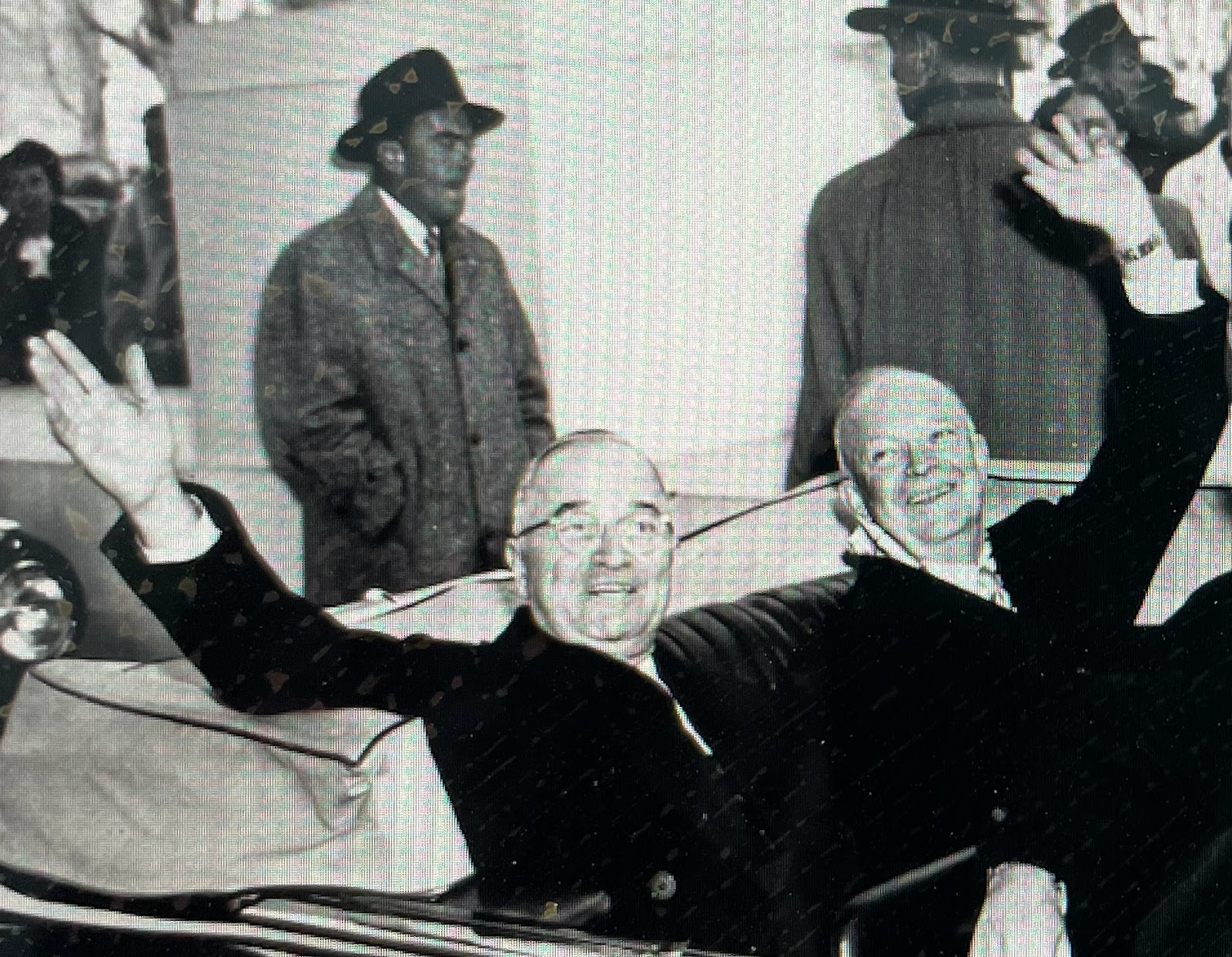
Truman was feeling out of place as President. Personally, he hoped that General Dwight D. Eisenhower, fresh off his victory in Europe, would run as a Democrat in 1948—with Truman stepping down to be his Vice President—but the General rebuffed the offer, and the reluctant Truman was compelled to run against New York’s popular Governor Thomas Dewey.3

That same day Pawley had written from his Belvoir farm address in Virginia to the Secretary State to let him know that while visiting Cuba in June he had spoken for an hour to Cuban President Carlos Prio Socarras who was “looking forward to an invitation to visit the United States in the immediate future." 

Read more »

Labels: , , , , , , , , , , , , , , , ,

13: CIA Director Allen Dulles Survives the Doolittle Critique

Following Ike's meeting with the Doolittle Committee, a memorandum was written. When it was finally declassified, it confirmed the criticism of CIA Director Allen Dulles that I had heard in my phone conversations with Morris Hadley and William Franke.  

Memorandum of Conversation

Washington, October 19, 1954.
The President saw General Doolittle and other members of the Committee appointed to investigate the activities of the CIA.
The report was presented by General Doolittle, who said they had gone over it with Allen Dulles for three reasons:

  1. (1)  to be absolutely fair;

  2. (2)  to study Mr. Dulles better to watch for his reactions to a report not wholly favorable;

  3. (3)  and their hope that the maximum good would come out of the report.

Mr. Dulles made several recommendations that were incorporated in the report. The President prefaced his remarks by saying that of course Mr. Dulles knew, as does everyone, that no two men would have the same judgments about certain things. That what we wanted to know was did we have a good man for the CIA head, and was he being selective and skillful in getting his assistants, and was his team working together in the best interests of the United States.

General Doolittle emphasized that the report was constructive criticism and in no sense a white wash. Some of the recommendations were very technical.

About Dulles: his principal strength is his unique knowledge of his subject; he has his whole heart in it, his life, he is a man of great honesty, integrity, loyally supported by his staff. His weakness, or the weakness of the CIA is in the organization—it grew like topsy, sloppy organization. Mr. Dulles surrounds himself with people in whom he has loyalty but not competence. There is a lack of discipline in the organization. There is a complete lack of security consciousness throughout organization. Too much information is leaked at cocktail party.

Read more »

Labels: , , , , , , ,